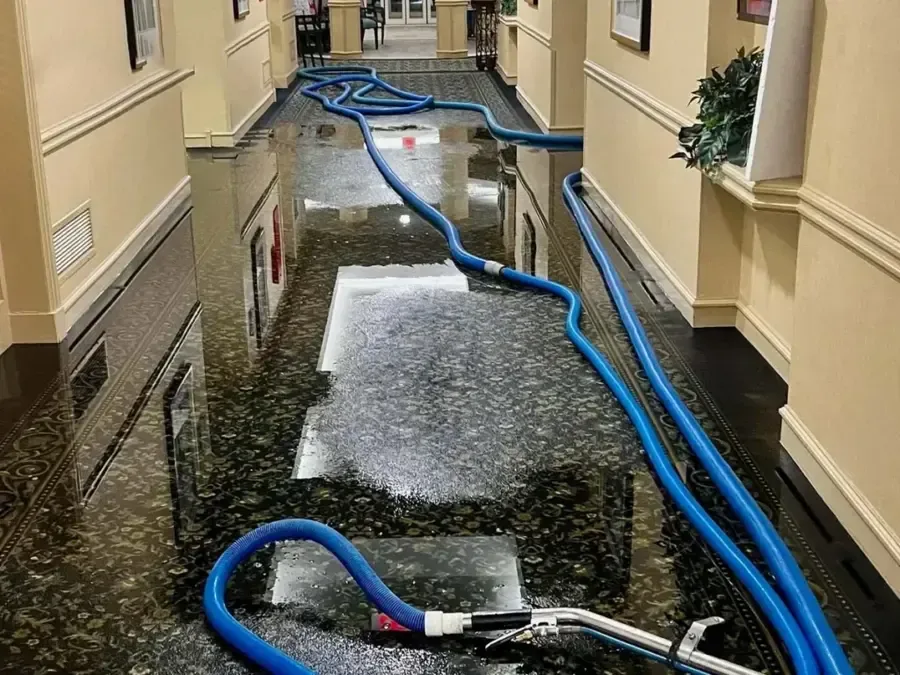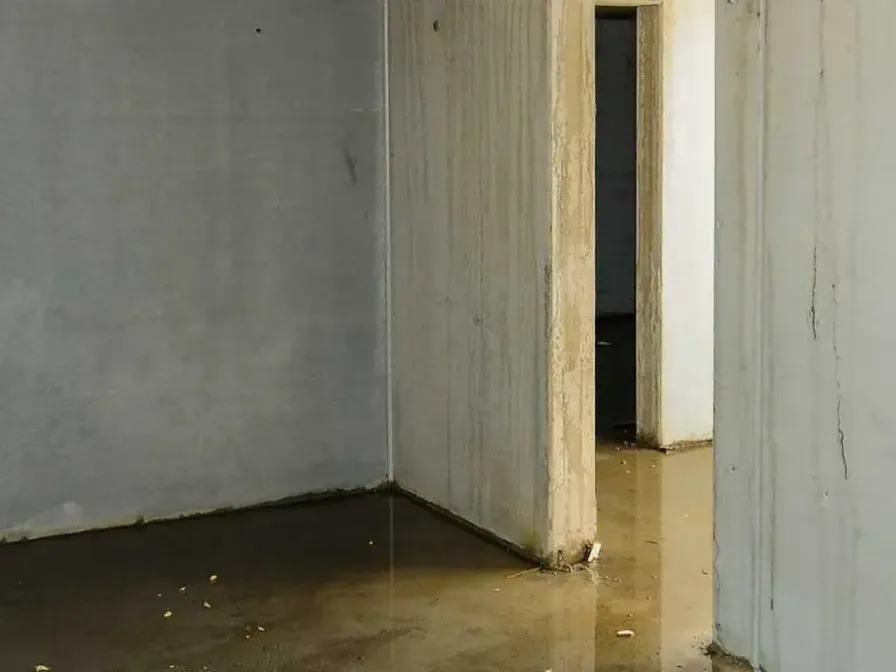
Water always finds the lowest level. In a Lafayette house with living space below grade, every failure upstairs, every sump overflow and every sewer backup ends up on the basement floor, and finished basements hold it in carpet, pad and drywall.
Why basements flood in Lafayette
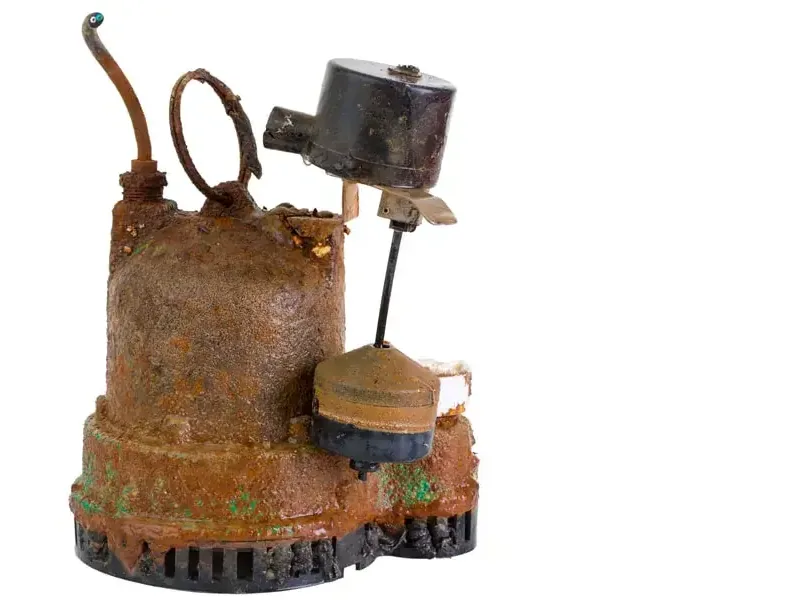
Sources vary from house to house. A failed water heater or washer hose, a split pipe along the rim joist after a freeze, a sump pump that quit in a storm or a backed-up floor drain all reach the basement first. Spring snowmelt and summer storms push water at window wells and foundation cracks, and the Colorado Geological Survey notes that swelling soils can damage houses over time when water collects along them.
- Water heater and softener failures
- Sump pits that overflow in a storm
- Floor drain and sewer backups
- Window wells that fill in heavy rain or snowmelt
Finished basements need more removal
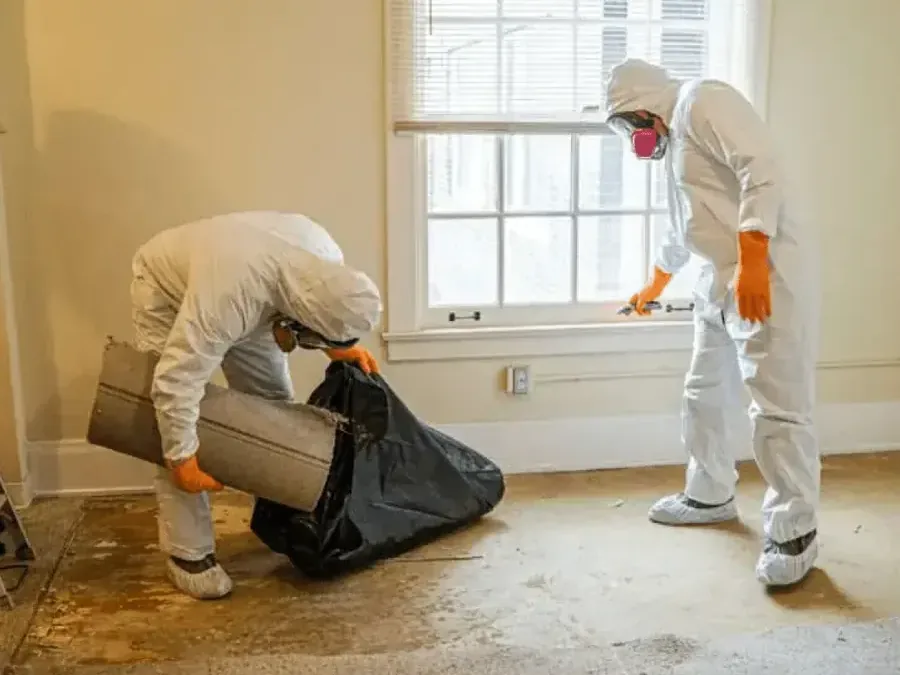
Carpet pad acts like a sponge and almost always comes out. Drywall that wicked water a foot or more is cut above the wet mark, and insulation behind it is pulled. Baseboards, laminate and particleboard furniture swell quickly. In the 1950s homes off South Public Road and the houses around Lafayette Park and Indian Peaks alike, the same rule applies: what can be dried stays, what holds water against the framing goes.
- Carpet pad removed and bagged
- Drywall cut a little above the wet mark
- Baseboards, laminate and swollen particleboard taken out
Drying the slab
Concrete holds water deep in the slab and gives it up slowly, so dehumidifiers run longer on a basement floor than on a framed main floor. The source decides the category: a burst pipe is usually clean water, while a sewer backup or outside runoff is Category 3. Ready.gov flood safety covers what to avoid in a flooded basement, and FEMA flood maps show whether a property sits in a mapped floodplain.