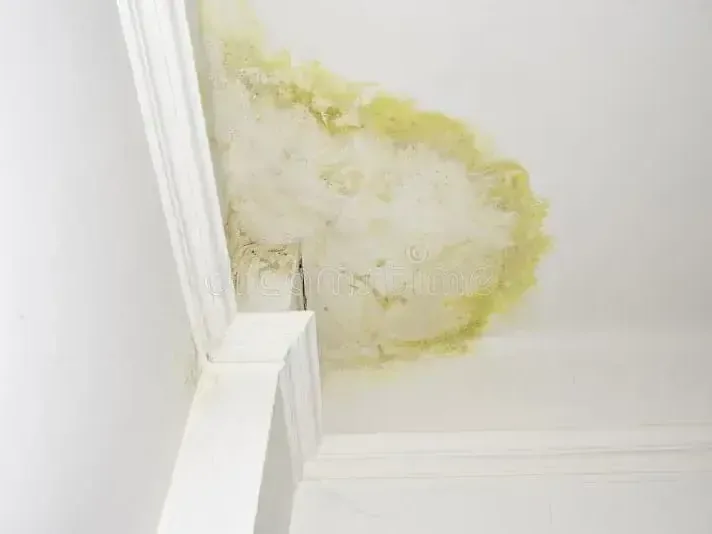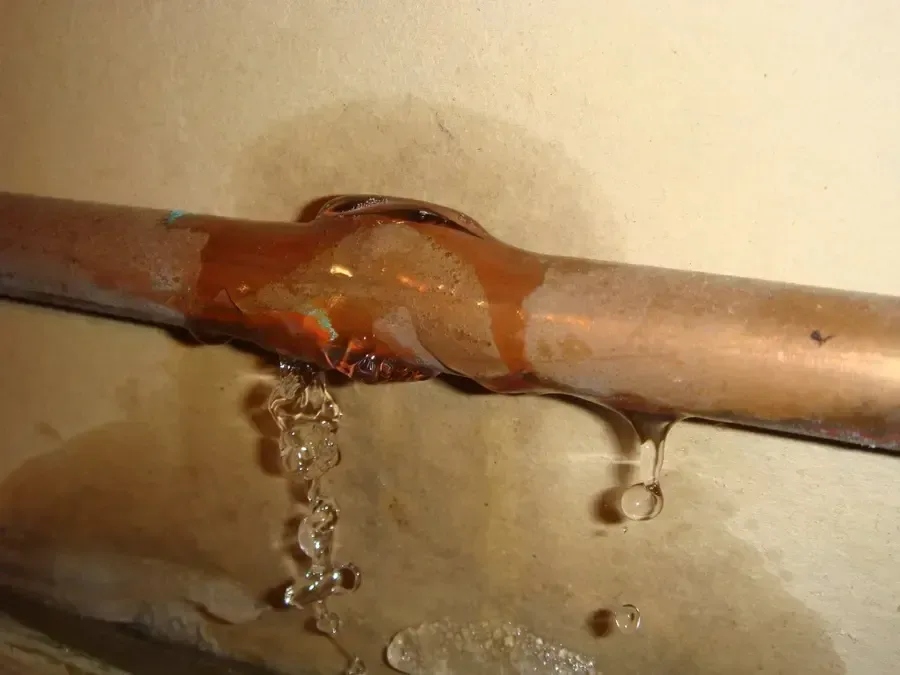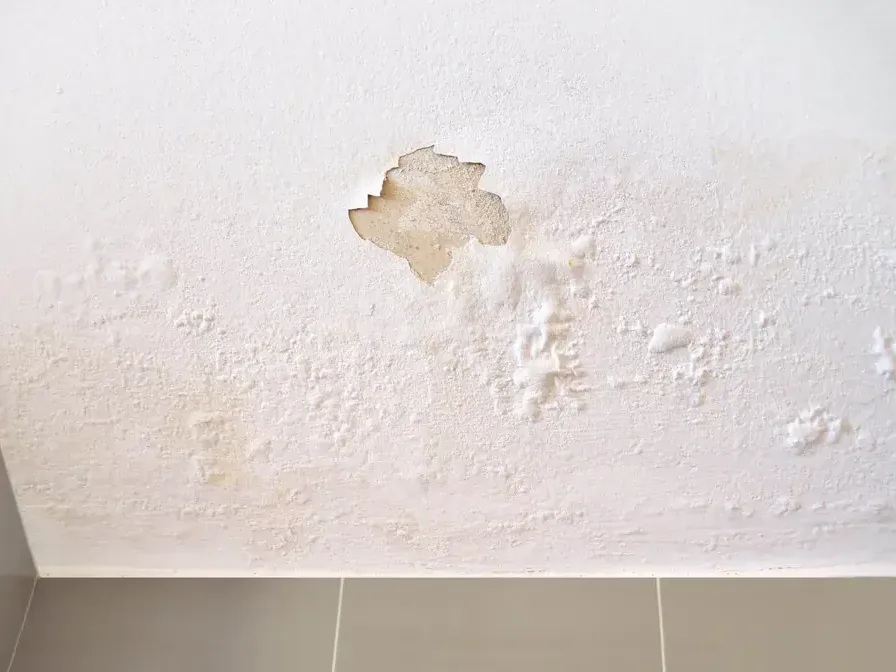
Ceiling leaks come from inside the house: an upstairs tub or shower, a toilet seal, a drain joint or a supply pipe in the floor above. The water spreads across the top of the drywall and through the joist bay before it shows as a stain, a bulge or a drip at a light fixture.
Where Lafayette ceiling leaks come from
In a two-story house near Lafayette Park or Silver Creek, the usual sources are the bathroom right above the stain, a laundry room on the upper floor or a supply pipe in the floor system. In a house with a finished basement, the main floor itself is the source for the ceiling below. In a single-story house off South Public Road, a ceiling stain more often points to the roof or the attic, which is a roof leak job.
- Tub, shower and toilet seals upstairs
- Drain joints in the floor system
- Supply pipes to an upstairs bath or laundry
- Main floor leaks into a basement ceiling
Opening the ceiling safely
Water and electricity meet at ceiling fixtures, so the circuit is shut off before any work. A ceiling that sags with water is drained through a small hole into a bucket, then the wet section is cut out. Thermal imaging and meters show how far the water traveled across the joist bay, so only the wet area comes down.
- Circuit shut off before any ceiling work
- Sagging spots drained through a small hole
- Only the wet section cut along the joists
Drying the joist bay
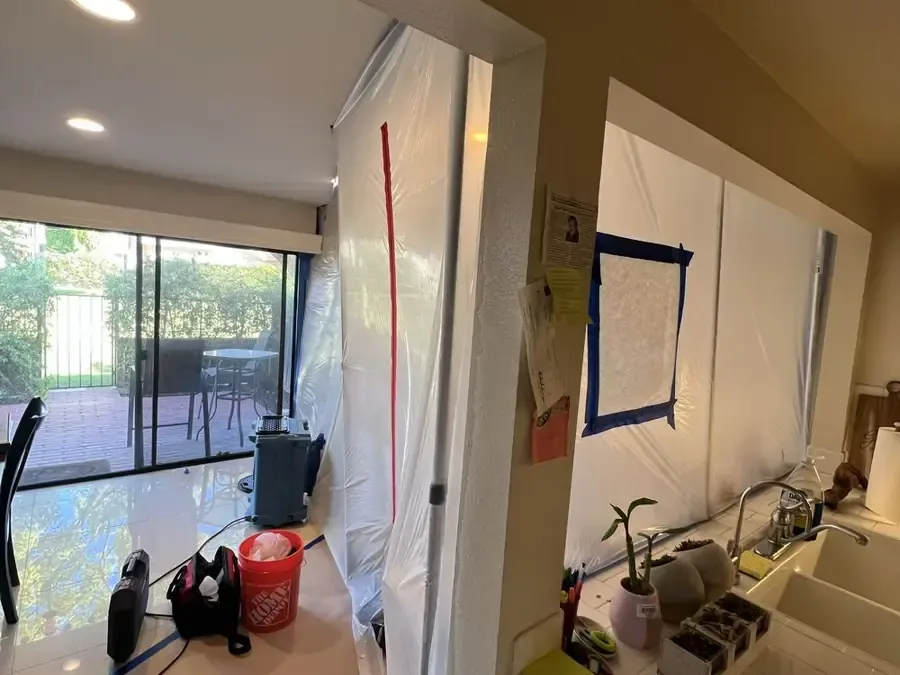
Air movers and dehumidifiers dry the joists, subfloor and the back of the drywall above, and insulation in the bay is pulled if it soaked through. If the source was a toilet or drain, the water may be Category 2 or 3 and the cleanup changes. The EPA WaterSense leak checklist covers toilet and fixture leaks worth checking, and the Consumer Product Safety Commission lists electrical safety basics for wet areas.