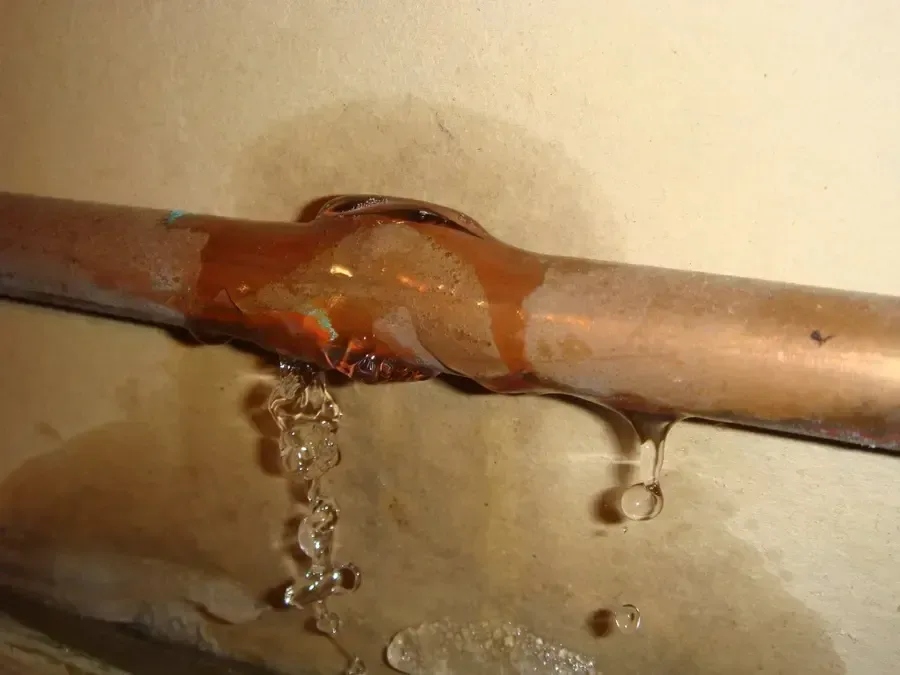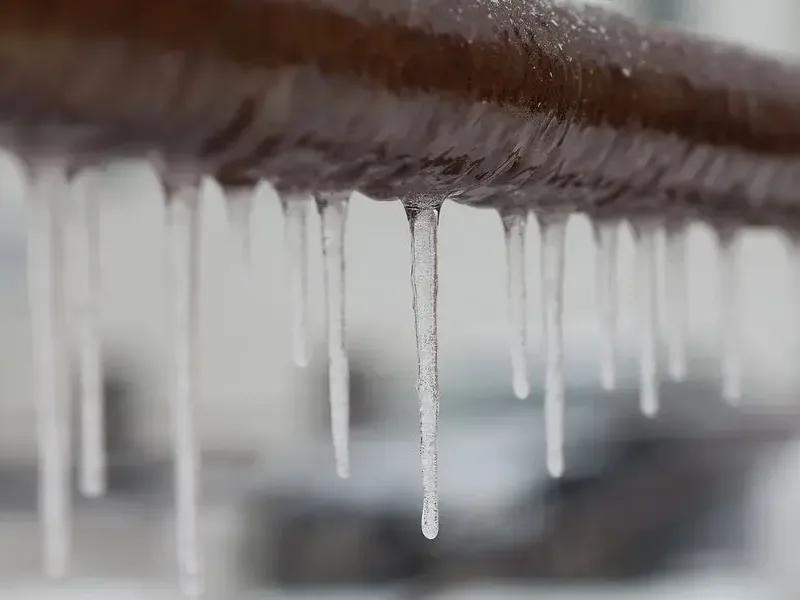
During Front Range cold snaps, nights in Lafayette can expose pipes near outdoor air. Water inside a pipe freezes, expands and builds pressure between the ice and a closed faucet, and the pipe splits where it is weakest, often away from the ice itself.
Why the leak shows up at the thaw
While the pipe is frozen, ice can plug the crack. When the wall warms up, water runs through the split at full pressure, often inside a wall or ceiling where nobody sees it for hours. That is why so many freeze calls come in the morning after a cold snap breaks, not during the coldest night.
- Kitchen and bath supply pipes on exterior walls
- Pipes in attached garages and crawl areas
- Basement runs along the rim joist
- Hose bib pipes that were not shut off for winter
Where Lafayette homes are most exposed
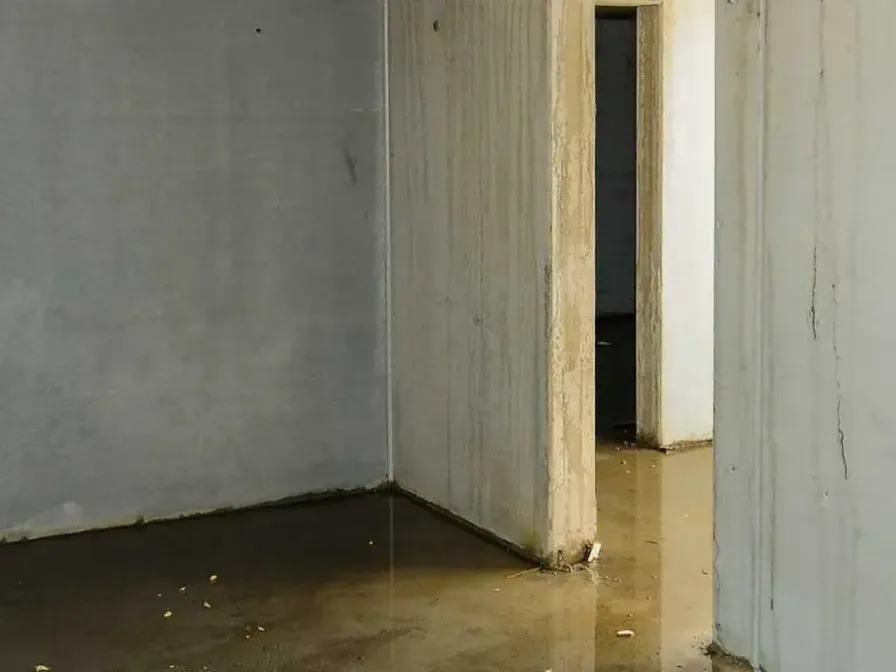
Any pipe close to outdoor air is at risk. In an older home near Old Town Lafayette or a two-story house near Lafayette Park or Indian Peaks, the weak spots are usually the exterior walls, the garage, the basement rim joist and the hose bib. Water from a split there runs straight down into a finished basement.
- Exterior wall cavities opened at the bottom
- Rim joist insulation pulled where it soaked
- Air aimed into the cavity, not just the room
Drying an exterior wall in winter
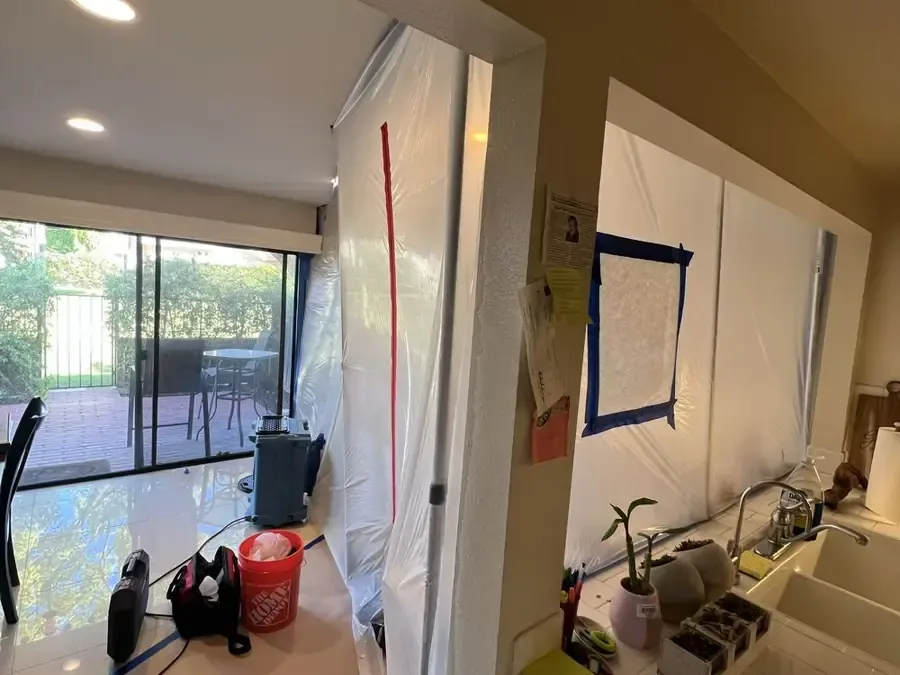
Exterior wall cavities are cold, so they dry slowly. The drying team opens the bottom of the wall or drills vent holes, pulls soaked insulation and runs LGR dehumidifiers with air movers aimed into the cavity. Ready.gov winter weather tips and the Department of Energy Energy Saver pages cover keeping heat up and sealing drafts before the next cold night.