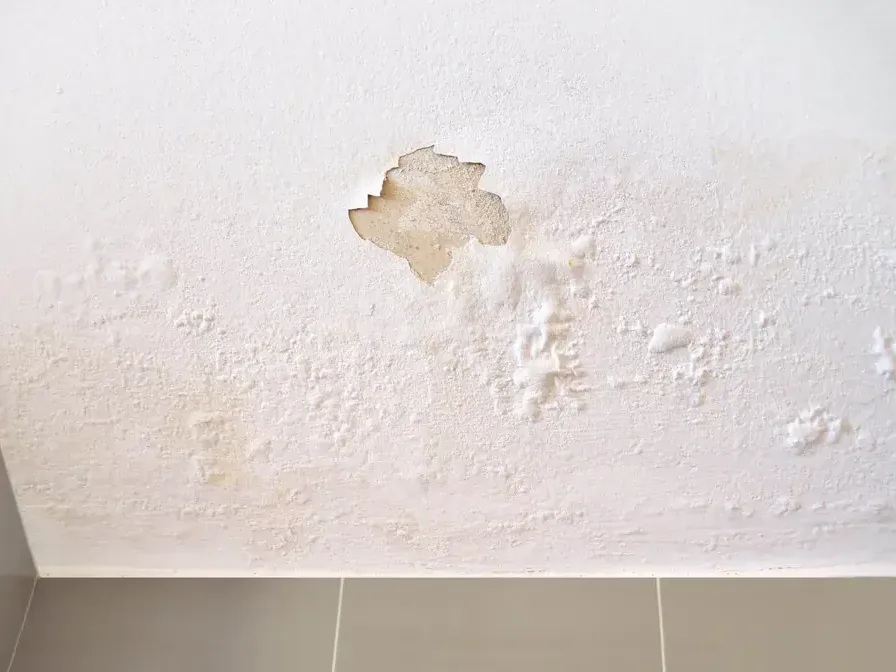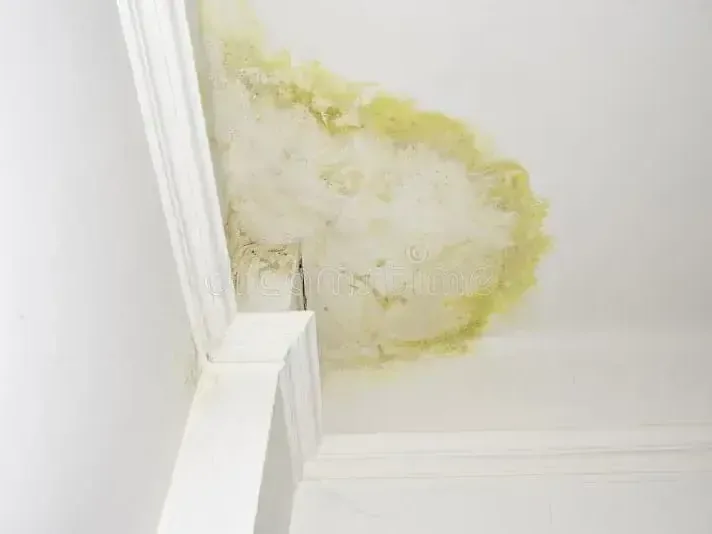
A roof leak has an exterior source and an interior moisture path. Temporary stabilization or roof repair addresses continuing entry, while restoration handles the water already inside. In Central Fort Lupton, a ceiling stain may sit below insulation that holds a much wider damp area. The first interior survey starts at the visible mark and tests outward, uphill, and into connected wall or floor finishes.
Weather can expose a small opening with broad impact
Colorado hail, snow, and wind driven precipitation can exploit damaged or vulnerable roof details. Water then follows sheathing, framing, penetrations, or insulation before reaching a room. Around the South Platte Valley, roof styles and building ages vary, so stain position alone cannot locate the entry. Source correction should be coordinated separately from the interior dry out, with both scopes documented clearly.
Ceiling safety and material condition plan access
Sagging, saturated, or deteriorated ceiling material can present a hazard and may require controlled removal. Wet insulation can block airflow and hold water against wood or finishes. Sound material can sometimes remain when the water stayed sanitary, access is adequate, and readings confirm progress. Contents beneath the leak are relocated or protected while the work area is prepared for drying.
Moisture records show whether the path is dry
Air movement and dehumidification target the exposed and retained assemblies. Measurements across the ceiling, upper wall, lower wall, and nearby flooring show how moisture changed. Photographs and notes connect the weather entry to interior material decisions. Near Fort Lupton High School, South Platte Valley Historical Park, or another local property, repairs should cover assemblies only after source control is stable and the remaining materials meet established dry references.