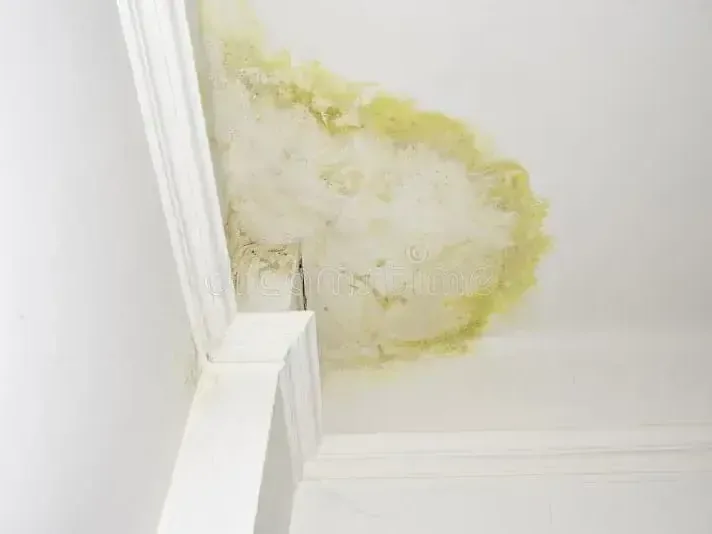
A damaged roof does not always reveal its indoor path directly below the opening. In Firestone, documented hail concerns and varied home layouts make attic, ceiling, wall, and lower level checks part of one connected investigation.
Key takeaways
- Stay clear of a ceiling that is sagging, cracked, or holding water.
- Temporary weather protection and interior drying solve different parts of the loss.
- Trace water from the roof through insulation and framing before placing equipment.
- Check rooms below and beside the visible stain for concealed migration.
- Use repeated moisture readings to decide when the assembly is dry.
Hail damage and indoor water do not follow the same outline
Local sources identify Colorado hail as a roof concern. Hail can affect the outer roof surface, but the wet spot indoors may appear later and away from the damaged area because rain follows sheathing, rafters, fasteners, wiring openings, and insulation before reaching a ceiling.
That path is why a roof inspection and an indoor moisture inspection belong together. A roofer addresses the exterior opening.
A roof leak water damage team tracks what became wet inside and plans removal or drying around the measured boundary.
A small ceiling stain can sit below a broader wet insulation area. The reverse can also happen when water follows one framing path and creates a concentrated mark.
Size at the paint surface is not a reliable measure of the whole loss.
- Note when the stain first appeared and whether rain was occurring.
- Look for changes near vents, valleys, flashing, and roof penetrations from a safe area.
- Check attic contents for drips without stepping on concealed ceiling material.
- Keep people and furniture away from a bowed ceiling.
Control rain entry while protecting the occupied rooms
Stopping new rain is the first exterior priority, but roof access can be unsafe during active weather or when the surface is damaged. Temporary protection should be installed by someone equipped for roof work.
Interior containers may catch a minor drip only when the ceiling is stable and electricity is not involved.
A wet light fixture, outlet, or electrical component changes the response. Occupants should avoid the area until power can be controlled safely.
Water should never be released from a ceiling without checking what lies below and whether the assembly can be approached.
Move dry contents from the edge of the affected room when the route is safe. Photograph stains, drips, and displaced items so the initial condition remains documented.
- Block access beneath sagging drywall.
- Do not climb into a dark or unstable attic.
- Keep temporary protection separate from permanent roof repair.
- Record every occupied room that shows a stain or damp finish.
Follow the wet path through the attic and ceiling
Insulation can hold water against framing and the back of drywall. Removing only the visible stain leaves that reservoir in place.
The inspection therefore follows the roof entry across sheathing, insulation, joists, ceiling surfaces, and adjoining wall cavities.
Wet insulation that cannot be effectively cleaned or dried in position is removed so the surrounding structure can be reached. Ceiling drywall that has lost strength, changed shape, or remained saturated may also need controlled removal.
Moisture readings extend beyond the obvious spot. That measured border keeps demolition focused while still catching migration into a neighboring room or wall.
- Inspect insulation above and around the stain.
- Check framing intersections where water can change direction.
- Measure adjoining walls and nearby ceiling bays.
- Examine the room below when the home has more than one level.
Ranch, two story, and finished lower spaces need different checks
Firestone has ranch and two story homes, including homes with finished basements. The inspection follows the water through each affected level, checking overhead cavities, shared walls and lower rooms along its path.
In a ranch home, roof water may reach ceiling bays across a broad single level. In a two story property, it may move through an upper wall before staining the level below.
If a home has a finished basement, water from plumbing opened by storm damage or from vertical wall cavities can appear below the main floor.
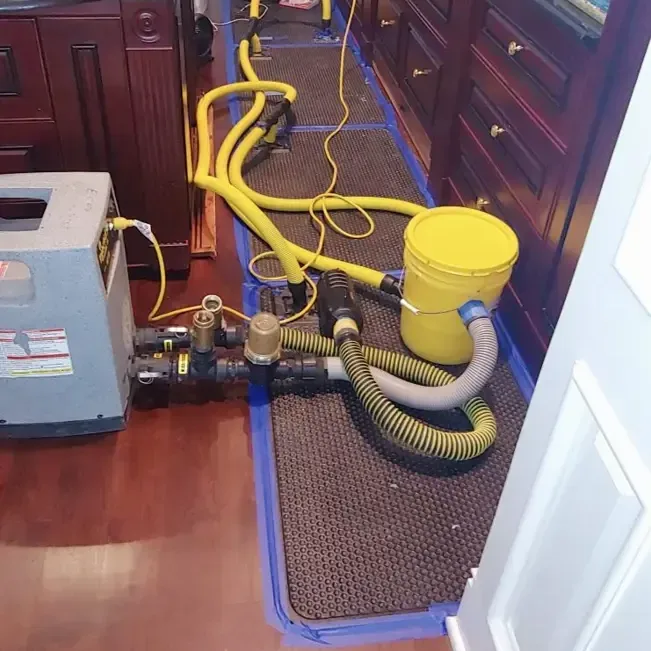
The structural drying process adapts equipment and access to the actual assembly. Air movement across a painted surface cannot replace drying inside a closed wet cavity.
Severe weather adds more than one possible source
An EF 2 tornado began on farmland near the town in June 2021. That documented event is a reminder that severe weather can affect roofs, but a current leak should be tied to current evidence rather than automatically attributed to hail or wind.
Rain may enter through roof damage, while a separate plumbing joint or appliance connection may also release water. A ceiling below a bathroom needs a plumbing check as well as a roof check.
A wet wall beside a refrigerator or washer deserves the same source discipline.
Weather history supplies local context. Moisture mapping, direct observation, and source testing decide the present job.
That distinction prevents the wrong repair from hiding a continuing leak.
- Compare the wet area with rooms and plumbing above it.
- Observe whether the stain changes only during precipitation.
- Check for more than one source after severe weather.
- Confirm source control before closing an opened cavity.
Drying records connect roof repair with interior restoration
Interior drying begins after active entry is controlled. Equipment placement should reflect the material map, not simply face the largest stain.
Readings taken during the job show whether framing, ceiling material, and adjacent finishes are responding.
Photographs of the roof related opening, removed insulation, measured rooms, and final condition create a coherent record. Owners can keep roof repair documents with that drying file so later work has the source and interior response in one place.
The Firestone water damage overview identifies related services if a roof loss also reaches a ceiling, a wall, or a lower room. Final reconstruction should begin only after retained material meets the drying goal.
- Keep the exterior repair description with indoor photographs.
- Label readings by room and material.
- Record insulation and drywall that were removed.
- Confirm the roof opening is controlled before rebuilding.
Questions
Can a hail related leak appear away from the roof damage?
Yes. Water can travel along sheathing, framing, fasteners, and insulation before it reaches a visible ceiling surface. Indoor mapping should follow that path.
Should an occupant drain a bulging ceiling?
A bulging ceiling can fail and may be near electrical components. The area should be isolated and assessed before anyone attempts to release water.
Does repairing the roof finish the water cleanup?
Roof repair stops new entry. Wet insulation, ceiling material, framing, and wall cavities still need evaluation and measured drying inside the building.
Can attic insulation dry in place?
That depends on its condition, contamination, access, and ability to release moisture. Material that blocks access or cannot be effectively dried may need removal.
Why are repeated moisture readings needed?
They show whether retained materials are losing moisture and when they have reached a dry target based on comparable unaffected material.