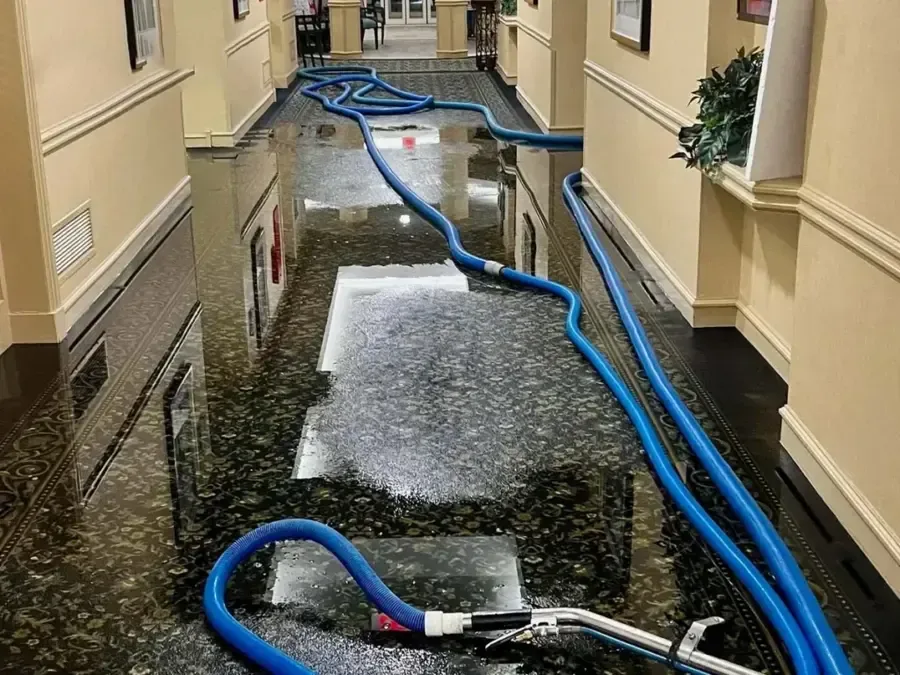
A documented water main break in Golden affected both homes and businesses. For a property owner, the practical task is to confirm whether water entered the building, separate utility conditions from an indoor plumbing failure, and document every wet material before drying begins.
Key takeaways
- After a neighborhood pressure change, the first inspection traces the indoor leak to its source.
- Confirm the entry route and stop any separate interior source.
- Extract standing water only after electrical and access hazards are addressed.
- Check walls, floors, contents, and adjoining rooms for concealed spread.
- Keep utility notices, repair findings, and moisture records together.
A utility event and a building loss are related but distinct
The documented local event affected homes and businesses, and the city reported that water quality was safe afterward. For a new loss, the crew traces the entry route and evaluates the water inside before selecting cleanup methods.
Main and private lateral repairs can cause temporary low pressure or outages. A pressure change may alert an owner to a utility issue, but indoor water may still come from a fixture, appliance supply, or building pipe.
The entry route needs direct confirmation.
The water extraction service starts with source and safety checks. Crews document whether water crossed outdoor surfaces, entered through an opening, or released from plumbing inside the structure.
- Note pressure changes at fixtures without repeatedly running water.
- Look for a visible indoor plumbing release.
- Record utility notices or site observations.
- Do not assign the source from neighborhood reports alone.
Safe access determines the first extraction zone
Water can reach outlets, equipment, stored chemicals, unstable finishes, or slippery walking surfaces. Occupants should avoid the affected area when electrical status or structural access is uncertain.
Once the area is safe, extraction can proceed from accessible zones toward concealed edges. Contents are photographed before movement and relocated to dry space when their condition allows it.
The crew maintains a clear route between wet and dry areas.
Outdoor entry may carry soil and debris, while a confirmed indoor supply release begins with a different exposure. That source distinction affects cleaning and material decisions even when extraction equipment looks similar.
- Keep people away from standing water near electricity.
- Mark the visible water edge before removal begins.
- Move dry contents through a protected route.
- Separate debris from items that may be cleaned.
Homes require room by room moisture mapping
Water can pass beneath finished flooring, enter wall bottoms, and appear in a room beyond the initial puddle. Closets, cabinets, floor transitions, and the opposite side of shared walls deserve direct readings.
A lower room may hold water in concrete, subfloor, wall plates, insulation, or flooring layers. No single foundation type should be assumed across the city, so the crew identifies the assembly at each affected property before choosing access or equipment.
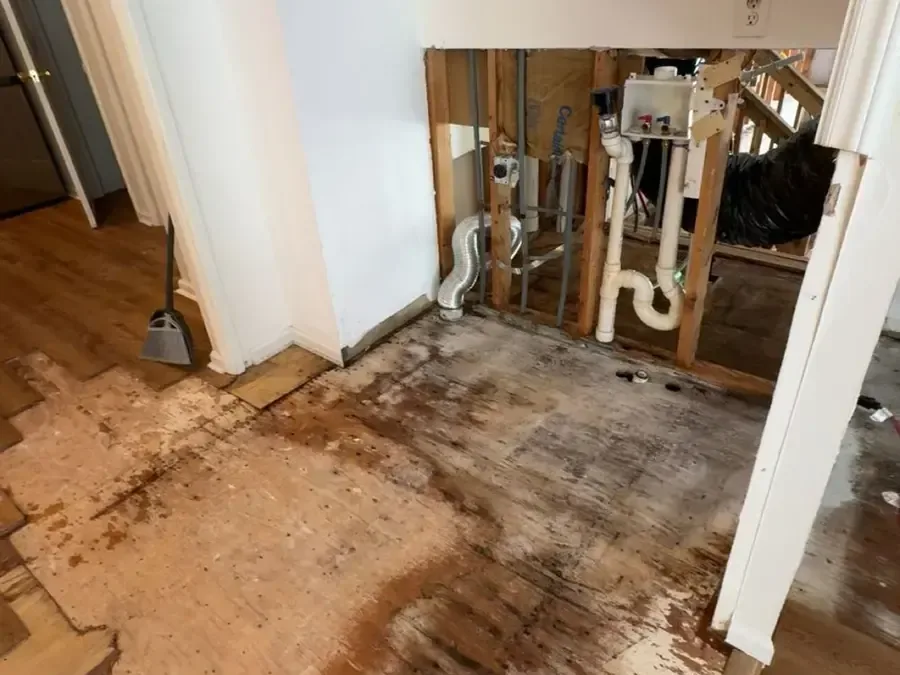
Removal stays tied to material condition and the measured path. Controlled openings can expose wet framing without stripping finishes from areas that remained dry.
- Measure beyond the visible stain or puddle.
- Check floor transitions and cabinet bases.
- Inspect rooms below and beside the affected area.
- Use an unaffected comparable material as the dry reference.
Businesses need zones and operating priorities
Downtown Golden includes civic, retail, and commercial buildings. A business loss can affect customer areas, inventory, offices, equipment, and shared building spaces at the same time.
The work plan should divide those areas by safety, moisture, and operational importance.
Dry zones can protect records and unaffected inventory while wet zones receive extraction. Shared walls and floor assemblies still need inspection because water does not respect tenant boundaries.
Building management and occupants should use one source record and one map of the affected footprint.
Opening any area for use should follow safety and moisture findings. A dry looking walkway is not enough when adjacent walls or flooring remain wet.
Drying turns the extraction map into a progress record
After liquid removal, retained materials release moisture into the air. Air movement and dehumidification are positioned for the actual wet assembly, then adjusted as readings change.
The structural drying service compares affected materials with dry references and records progress by room. If readings stop improving, the team checks for trapped water, blocked airflow, or an active source rather than merely extending equipment use.
Final readings should cover the outer moisture boundary as well as the center of the loss. That confirms the edge did not remain wet after the obvious area improved.
- Label every reading by material and room.
- Recheck the edge of the original wet boundary.
- Adjust equipment when the material response changes.
- Confirm source control before reconstruction.
Keep utility facts and restoration facts in one timeline
A complete timeline includes the first pressure change, utility communication, observed entry, indoor plumbing findings, extraction, material removal, cleaning, and final drying. That order helps an owner explain what happened without blending an area outage with a building source that has not been verified.
Clear Creek and mapped runoff areas are also part of the local water setting. If outdoor water was present, the record should say so and show its path.
If the loss stayed within indoor plumbing, the file should preserve that distinction.
The Golden water damage overview connects related storm, pipe, ceiling, and drying services. After the property is dry, an owner can update shutoff labels, storage locations, and emergency contacts using the confirmed details from the event.
Owners should also record when normal pressure returned and whether every fixture operated normally afterward. That observation belongs beside the utility communication, while moisture readings stay with the restoration record.
Keeping those facts distinct makes it easier to identify a later plumbing change without assigning it automatically to the earlier main repair.
For a business, the final file can identify which zones stayed open, which contents moved, and which shared building areas were inspected. A homeowner can use the same approach room by room.
The format changes with the property, but the evidence still follows source, spread, removal, cleaning, and drying.
- Save utility and plumber communications.
- Keep before and after photographs by room.
- List all removed materials and affected contents.
- Attach final moisture readings to the repair record.
Questions
Does low pressure prove a water main has broken?
No. Main and private lateral repairs can cause temporary pressure changes or outages, but the utility or plumbing source needs confirmation for a specific event.
Can a main break affect both homes and businesses?
Yes. A documented local main break affected both. Each property still needs its own entry, safety, and moisture assessment.
Why does the water source matter for cleanup?
Water that crossed outdoor surfaces may carry soil and contamination. A confirmed indoor supply release begins with a different exposure, which affects cleaning and material decisions.
Can a business reopen one dry area?
That depends on safe access, shared assemblies, moisture boundaries, and operating conditions. Dry zones should be supported by inspection rather than appearance alone.
What proves the building is dry?
Final readings from affected materials are compared with dry reference materials at the property. The record should include the center and edge of the original wet area.