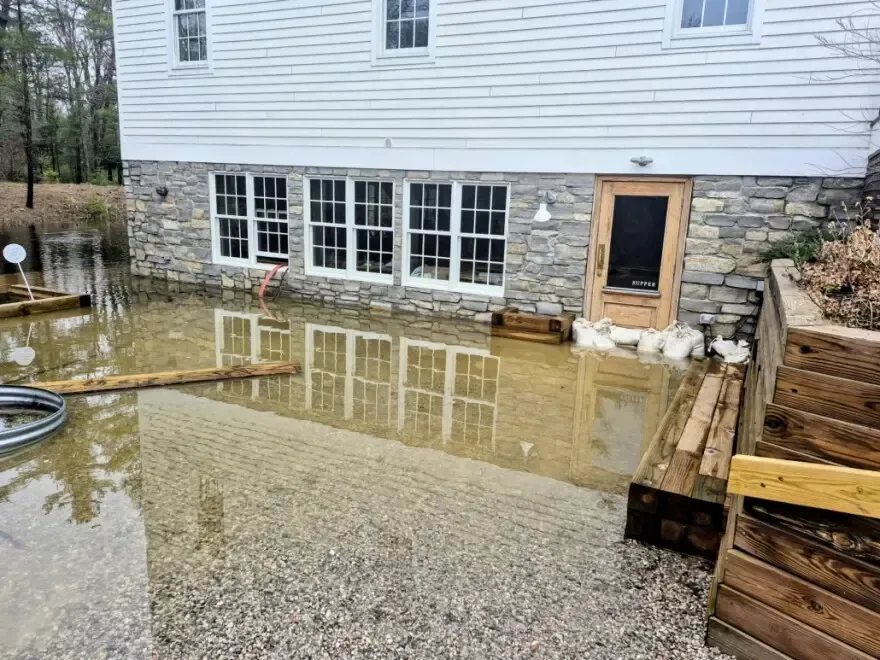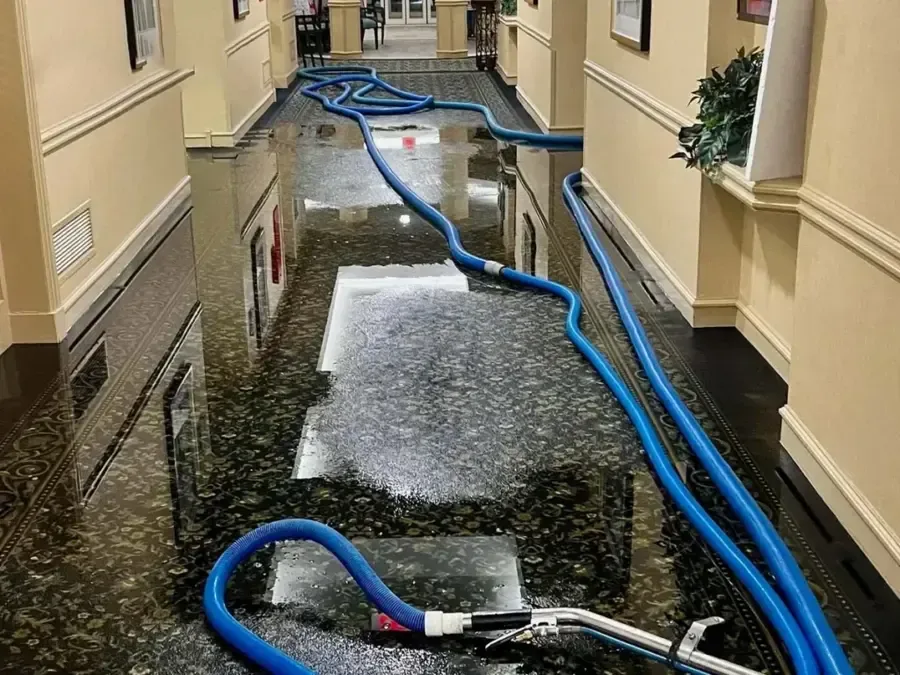
Water may arrive from indoor plumbing, an appliance or runoff moving toward a building. Around Clear Creek and mapped collection areas, the route matters because water that crossed soil or pavement needs different handling from a recent supply release. Technicians identify that condition before moving equipment into Golden properties.
Extraction begins with source and safety decisions
Removing open water reduces continued absorption into carpet, floor layers and gypsum board. The crew selects portable or higher capacity equipment according to access and depth, protects dry rooms from tracking, and watches for electrical hazards. If the release continues, pumping alone cannot solve the problem, so source control stays first on the plan.
- Confirm the active release has stopped
- Separate affected areas from dry spaces
- Lift water from floors and carpet
- Record the initial conditions
Visible removal is only the first phase
Water follows seams, penetrations and low points. Readings along wall bases, cabinetry and adjoining rooms show whether moisture moved beyond the obvious edge. At Downtown Golden businesses or Colorado School of Mines buildings, staged access can keep unaffected areas organized while technicians address wet sections. Materials that cannot be restored are documented before removal.
- Map moisture past the wet edge
- Check layered floor assemblies
- Open only where readings justify access
Drying follows the extraction path
Once open water is gone, evaporation and dehumidification handle what remains within structural materials. Air movers direct airflow across damp surfaces while dehumidifiers collect released vapor. Technicians log changing conditions and compare affected materials with dry references. That measurement closes the gap between a floor that feels dry and a building assembly that is ready for repairs.