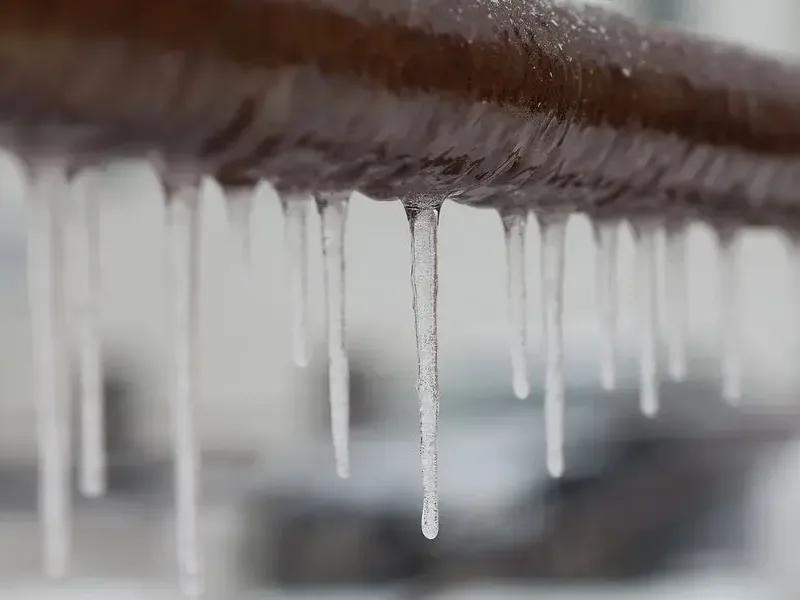
A reduced faucet flow can be the first clue that ice is restricting a pipe. In Niwot, a careful response means locating the main shutoff, warming the frozen section slowly, and watching the entire pipe path for a split that begins leaking during the thaw.
Key takeaways
- Treat reduced faucet flow during severe cold as a possible frozen pipe warning.
- Locate the main water shutoff before thawing begins.
- Use gradual warmth and never use an open flame on a frozen pipe.
- Watch walls, ceilings, cabinets, and lower rooms as flow returns.
- Extract released water and verify hidden cavities with moisture readings.
Reduced flow is a warning rather than proof
A faucet that produces less water during a cold period may point to ice in the supply path. It can also have another cause, so the response begins with observation rather than forcing the fixture or applying intense heat.
Check whether the change affects one fixture, several fixtures, or both hot and cold water. Note any frost, unusual bulging, or dampness on accessible pipe sections.
Closed cabinets and unheated spaces deserve attention because cold air can remain around plumbing there.
The frozen pipe service page explains the local response. A suspected freeze should be treated as a possible leak even when no water is visible yet, because a crack may remain sealed by ice until thawing restores pressure.
- Compare flow at nearby fixtures without repeatedly cycling them.
- Look for frost only on accessible pipe and fittings.
- Listen for water movement inside a wall or cabinet.
- Keep the area below the suspected section clear.
Know the shutoff before warming the pipe
Regional guidance says the main water shutoff should be located before a freeze emergency. That preparation matters because a pipe can begin releasing water as the ice softens.
A reachable control lets an occupant stop new flow without searching through a wet area.
If the shutoff cannot be reached safely, occupants should not cross standing water or approach electrical equipment to find it. The utility or an appropriate plumbing professional can help with source control based on the property condition.
Open the affected faucet only as part of a controlled thaw plan so changing flow can be observed. Keep absorbent material and a container nearby only when the floor is dry, electricity is not involved, and the pipe is accessible.
- Identify the main shutoff and make sure the route stays clear.
- Show other occupants where the control is located.
- Do not enter water to reach a valve.
- Prepare for a release before heat is applied.
Thaw slowly and keep flame away
Frozen pipes should be thawed slowly without an open flame. Concentrated flame can damage the pipe, ignite nearby material, and create a dangerous temperature change without revealing whether the pipe has already split.
Gentle warming starts at an accessible portion and continues while the faucet and surrounding area are watched. Concealed sections in a wall, attic, crawl space, or ceiling should not be cut open blindly.
A plumber can identify the frozen route and choose safe access when it is hidden.
A thaw is not complete merely because water begins to flow. The full accessible route should be checked for spraying, dripping, and moisture that appears in an adjoining finish.
- Never use a torch or another open flame.
- Keep combustible contents away from the work area.
- Watch the pipe and nearby finishes throughout the thaw.
- Close the shutoff if a split begins releasing water.
Exterior walls and unheated spaces deserve a wider check
Pipes in exterior walls, basements, crawl spaces, attics, garages and cabinets can freeze. That list describes vulnerable locations, not a claim that every property contains each space.
A pipe in an exterior wall can release water behind drywall before a stain appears. Attic plumbing can wet insulation and a ceiling below.
A garage or cabinet leak may travel beneath stored items and into an adjoining wall. Where a basement or crawl space exists, water can follow framing and openings into that lower area.
A burst pipe cleanup assessment follows the actual pipe route and measured moisture. The inspection expands only where evidence shows water has traveled.
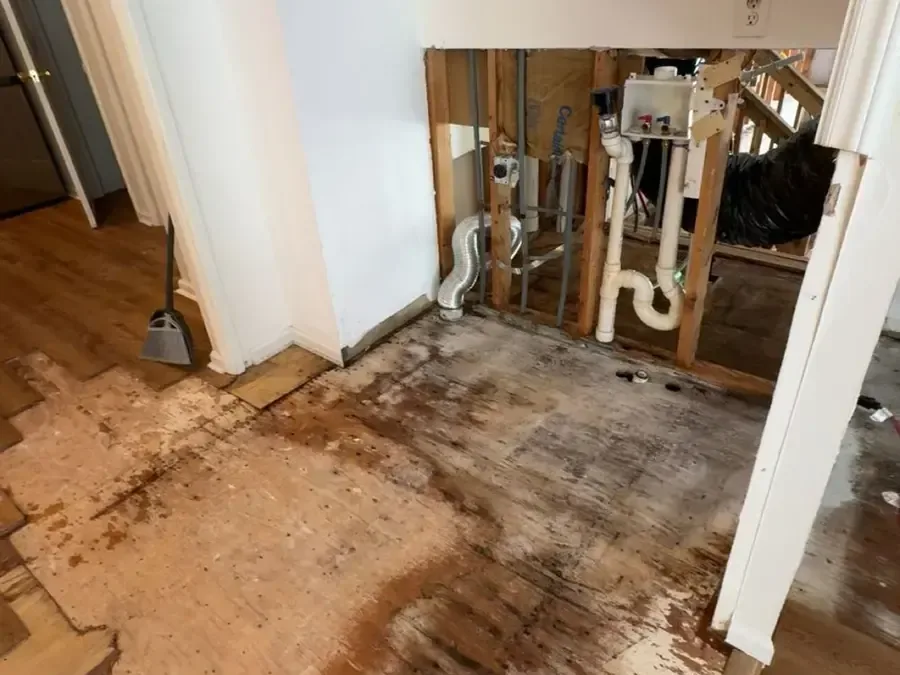
Water removal is followed by cavity drying
Once the damaged pipe is isolated, visible water is extracted. Contents that block access are documented and moved to a dry location when safe.
Moisture readings then show whether water reached subfloor, wall plates, framing, insulation, or a room below.
Wet insulation may need removal so surrounding material can be reached. Drywall that has lost strength or traps moisture may require a controlled opening.
The goal is to expose only what the water path and readings support.
Drying equipment is positioned for the retained assembly. Repeated readings are compared with dry reference material at the property, showing whether retained materials have dried beyond their visible surfaces.
- Extract standing water before arranging drying equipment.
- Map the wet boundary in every affected room.
- Open cavities only where access is needed.
- Track material readings until the dry target is reached.
Prepare homes and old town businesses before the next cold period
Niwot is an unincorporated community governed by Boulder County. Old Town Niwot contains a commercial district framed by Second Avenue, Niwot Road, and the railroad tracks, while neighborhoods such as Cottonwood Park West, Dry Creek, Johnson Farm, and Meadowdale include privately owned streets.
Those local arrangements can affect whom an owner contacts about property access or permitting, but they do not change the indoor freeze response. Each household or business benefits from a known shutoff, clear cabinet access, and a plan for checking unoccupied rooms during cold weather.
The local water damage overview keeps related extraction and drying options available. After a loss, update the plan with the exact pipe location and travel path that were confirmed.
- Label the main shutoff so it is easy to identify.
- Keep access to exposed plumbing clear.
- Record the location of a repaired frozen section.
- Arrange property checks when a building will be unoccupied.
Questions
Does reduced faucet flow always mean a pipe is frozen?
No. It can be an early warning sign, but another restriction can cause reduced flow. Cold conditions, the affected fixtures, and accessible pipe observations help narrow the cause.
Why should the main shutoff be found before thawing?
Ice can seal a crack temporarily. When the ice melts and pressure returns, the crack may release water, so a known shutoff allows faster source control.
Can an open flame thaw a pipe safely?
No. Frozen plumbing needs slow thawing without an open flame. Flame can damage pipe and nearby materials and create a fire hazard.
Where can frozen pipe water hide?
It can remain in insulation, wall cavities, ceiling bays, subfloor edges, cabinets, and rooms below the damaged section. Moisture mapping follows the actual route.
What confirms that drying is finished?
Readings from affected material are compared with dry reference material at the property. Final documentation should identify the areas and materials checked.