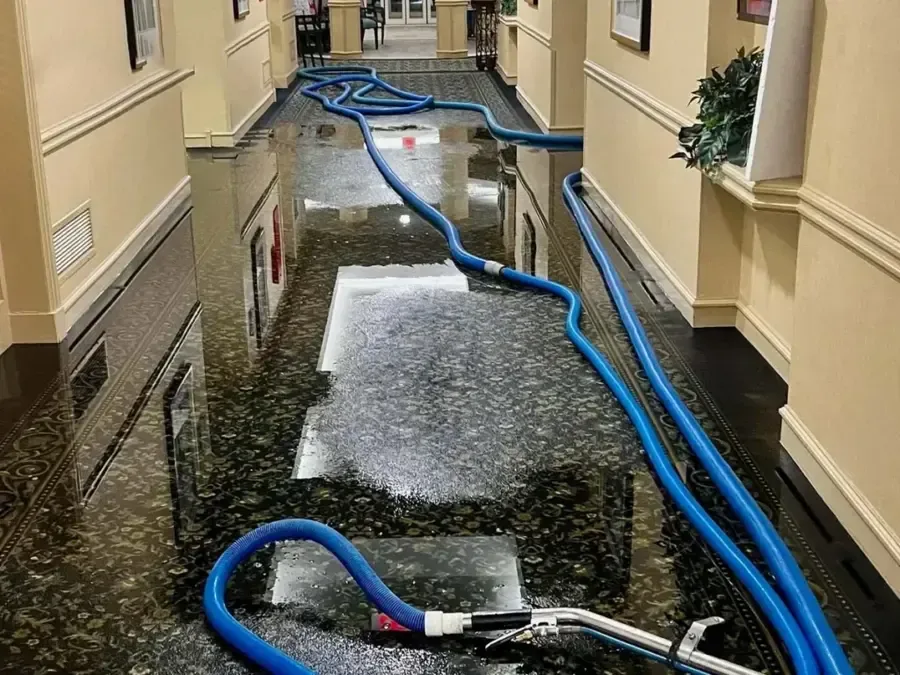
Sewage is not a routine wet floor. People and pets should remain outside the affected area, and items should not be carried through clean rooms without a handling plan. The work begins by defining the boundary and preventing traffic from spreading contaminated water or debris.
Containment protects the rest of the property
The crew establishes a work route and separates the affected zone from occupied space. Standing water and gross debris are removed with equipment suited to contaminated material. Unnecessary air movement is avoided until removal and cleaning reduce the chance of carrying contamination beyond the boundary.
- Block casual entry by occupants and pets
- Plan an exit route for bagged waste
- Protect clean flooring along the work path
Porous materials require firm decisions
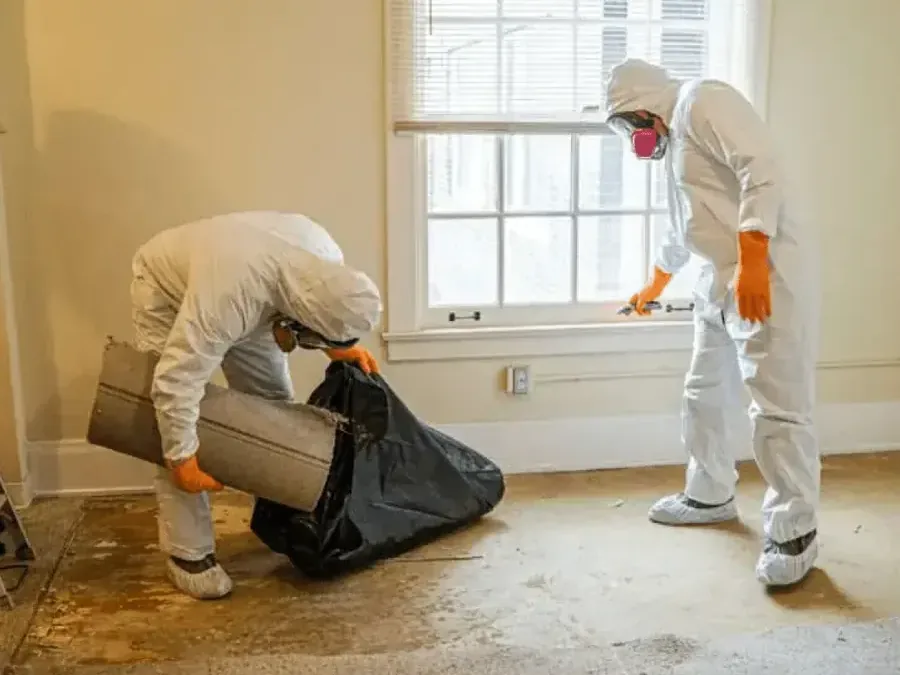
Carpet pad, damaged drywall, insulation, and other absorbent materials can hold sewage where surface cleaning cannot reach. Their condition and exposure direct removal. Durable surfaces are cleaned in a deliberate sequence after visible soil is gone, with edges and penetrations included.
- Remove affected porous layers that cannot be restored
- Clean wall plates, floor edges, and durable fixtures
- Keep contaminated tools separate from clean equipment
Drying follows cleaning, not the reverse
Structural drying is placed after the contaminated material has been removed and retained surfaces have been cleaned. Moisture readings then track framing, subfloor, concrete, and other durable assemblies. Documentation distinguishes source correction, removal, cleaning, and drying as separate completed stages.
- Record materials removed from each room
- Measure cleaned surfaces before equipment placement
- Complete with final moisture readings and photographs