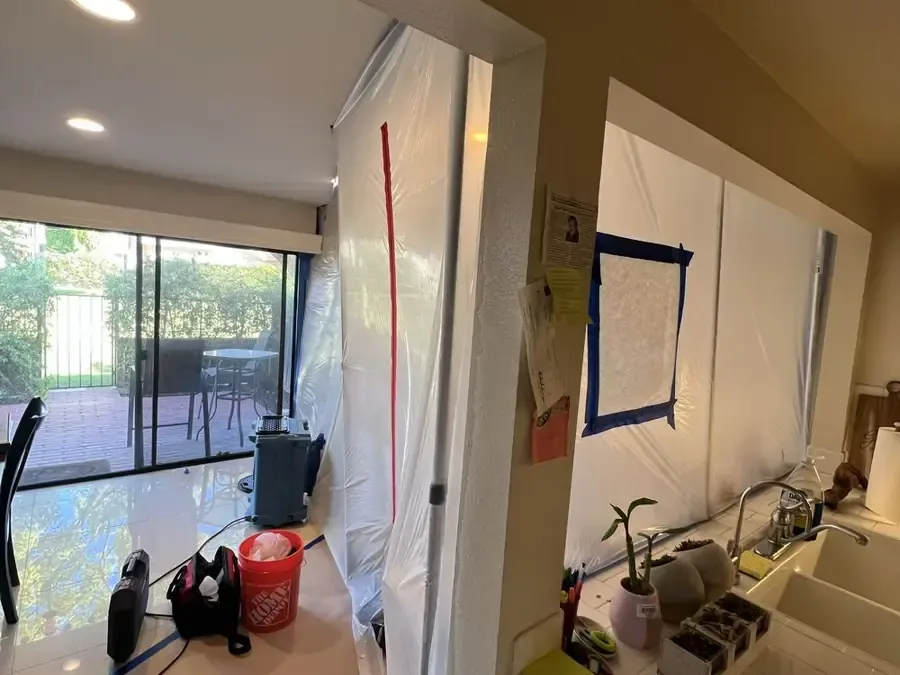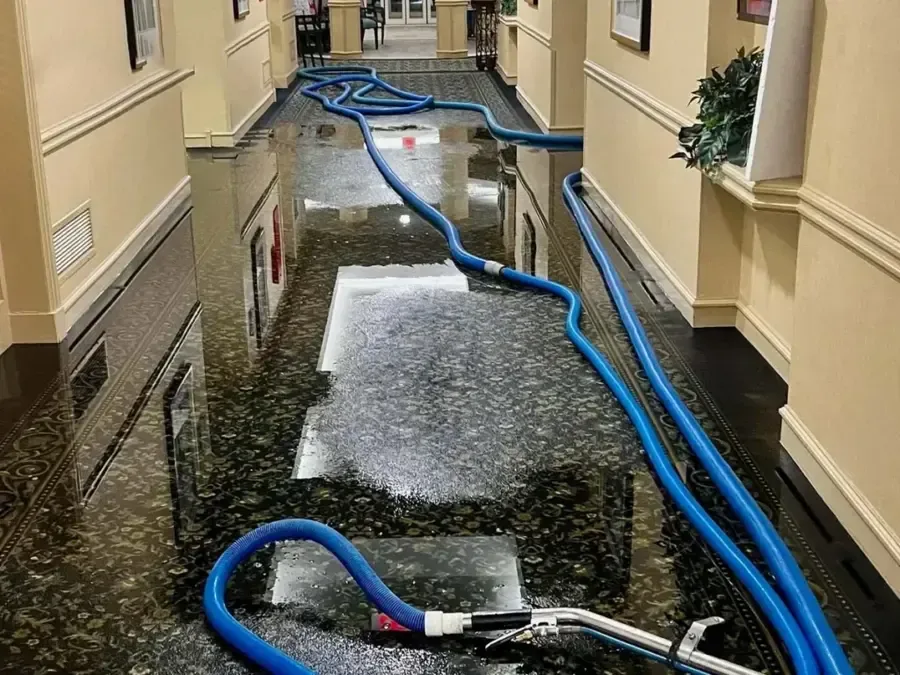
A broad wet floor rarely tells the whole story. Water can travel under trim, through floor seams, and into cavities before a crew arrives. The first inspection separates water that can be removed immediately from moisture that must leave through controlled evaporation.
Source control comes before pumping
Extraction cannot outrun an active release. The crew identifies whether the source is storm entry, an indoor fixture, or another water event, then confirms that flow has stopped. When a shutoff involves a city meter pit, only authorized utility personnel are permitted to open it.
- Keep clear of electrical hazards near wet floors
- Use the appropriate shutoff for the confirmed source
- Document where water first appeared and where it traveled
Removal follows the actual water path
Portable and truck mounted equipment may serve different areas of the same loss. Open flooring, carpet, pad, and accessible low points are addressed in an order that reduces spread. Moisture readings at wall bases and adjoining rooms reveal pockets that a surface pass could miss.
- Extract open areas before moving to edges
- Check transitions between hard and soft flooring
- Revisit closets, cabinets, and rooms below the source
Drying starts with a measurable target
Pumps leave materials damp even when no water remains underfoot. Air movement and dehumidification are placed around the materials that can be retained. Reference readings from comparable dry materials set the goal, and follow up measurements show whether conditions are moving toward it.
- Record starting readings by material and location
- Adjust equipment when one pocket dries slowly
- Finish after retained materials meet the chosen goal
Every extraction pass is checked against the mapped boundary before the crew shifts attention to structural moisture.