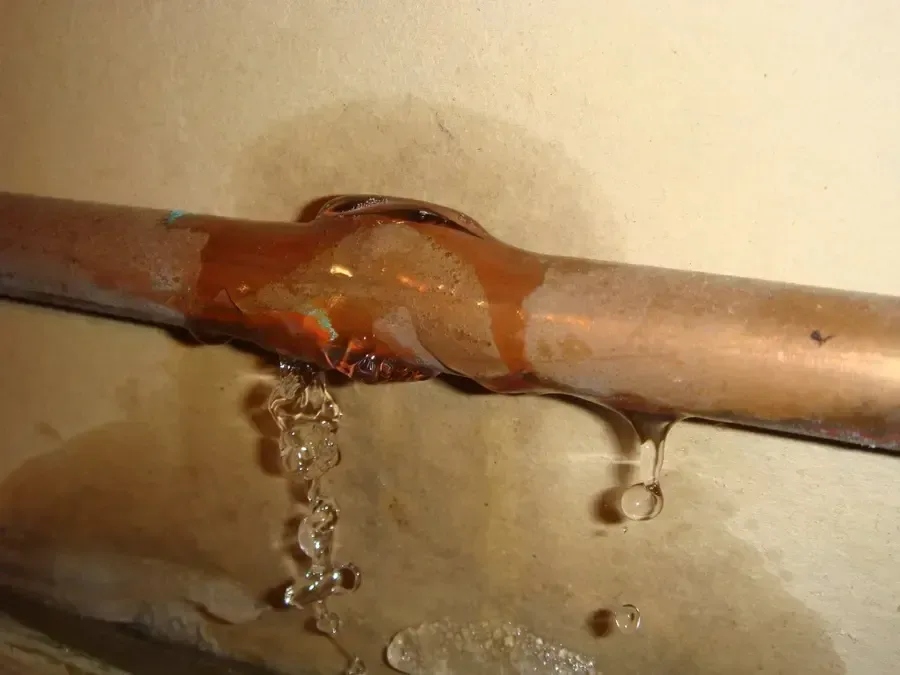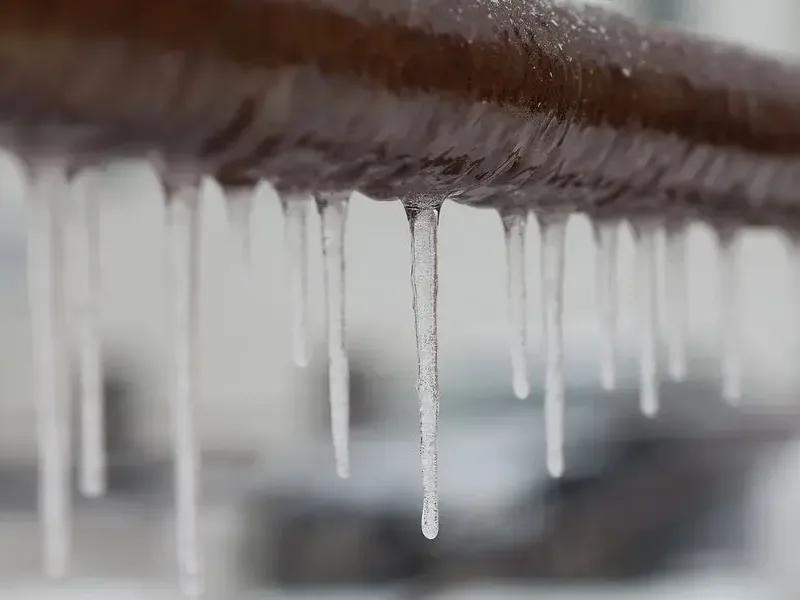
A freeze can conceal damage because ice temporarily blocks the split. Once heat returns, the pipe may resume flow through that opening. Planning for the transition protects the room from an avoidable second release and keeps the source evidence available for repair.
Prepare the area before temperature changes
The suspected section and nearest safe water control are identified first. Property around the pipe is moved from dry access, while electrical concerns and finished surfaces below are noted. Warming should not begin as an unobserved experiment behind a closed wall or appliance.
- Keep the shutoff accessible throughout the thaw
- Watch the room below the suspected section
- Do not use an open flame on plumbing
Cold cavities hold more than the pipe itself
Insulation, drywall backs, framing, and cabinet interiors can remain cold and hide early moisture. Direct readings around the suspected route establish a baseline. If water appears, the crew can distinguish a new wet boundary from normal cold material response and open only where needed.
- Check exterior wall faces from accessible sides
- Measure garage and basement finishes along the route
- Inspect cabinet plumbing without forcing unsafe access
Drying continues after normal flow returns
Once the pipe is repaired, extraction removes reachable water and saturated materials are evaluated. Retained wood, drywall edges, subfloor, and concrete receive a drying setup based on their response. Repeated readings confirm that cold dense areas are improving rather than simply warming.
- Separate repair completion from drying completion
- Track insulation areas and framing as different materials
- Finish with stable readings at every marked point