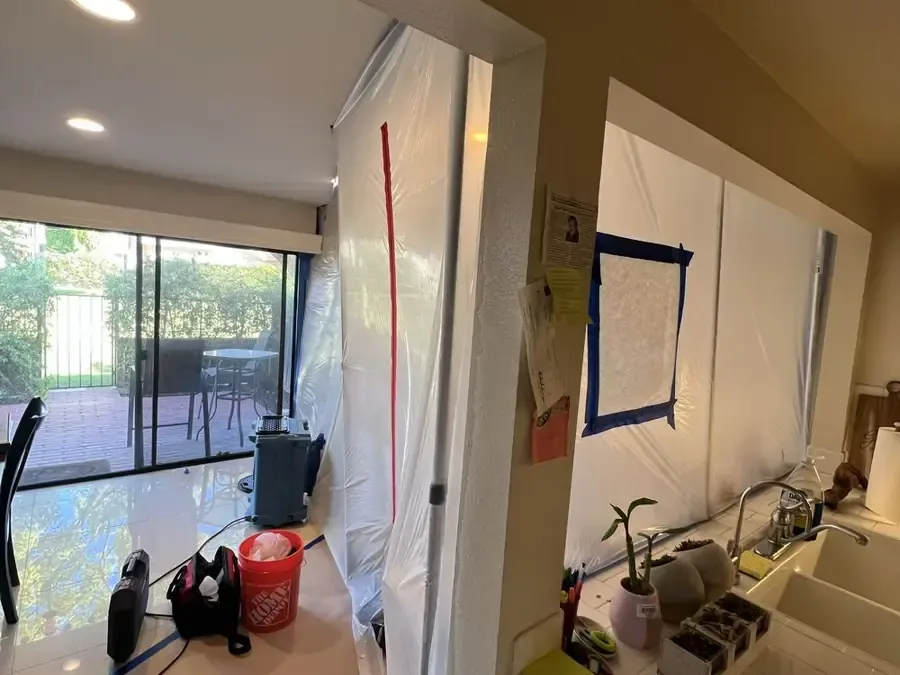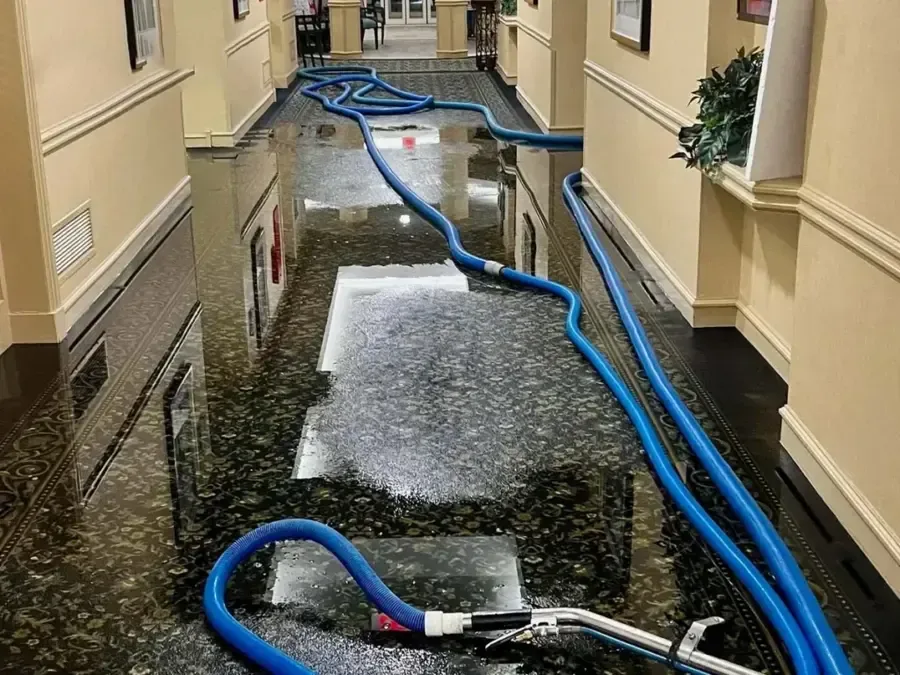
Standing water moves according to floor slope, seams, absorbent finishes, and openings around utilities. The deepest spot may not be near the source. A useful extraction plan therefore begins by marking the full boundary and deciding which clean travel route the crew can preserve.
Removal starts at the safest useful point
The source and electrical conditions are assessed before hoses cross the room. Extraction proceeds from accessible open water toward low pockets, edges, and transitions. When outside water is involved, contamination and sediment alter equipment handling and the materials that can remain after the bulk water is gone.
- Keep cords and connections outside wet travel routes
- Start where removal will create safer working access
- Recheck low areas after the first pass
Flooring layers need separate answers
Carpet, pad, wood products, resilient flooring, and concrete can show the same surface puddle while holding very different moisture below. Repeated extraction may help one assembly, while another needs controlled access or removal because a layer traps water and prevents a reliable dry result.
- Compare readings across every flooring transition
- Inspect trim and wall plates around the perimeter
- Check the room below when penetrations allow travel
The extraction record becomes the drying map
After recoverable water is removed, the crew measures walls, floors, framing, cabinets, and nearby dry references. Those readings define equipment positions and monitoring points. Any location that stays elevated receives a specific adjustment instead of being hidden by a generally dry room surface.
- Label each measured zone by material
- Place airflow where retained surfaces can release moisture
- Continue until every mapped area has a completion reading