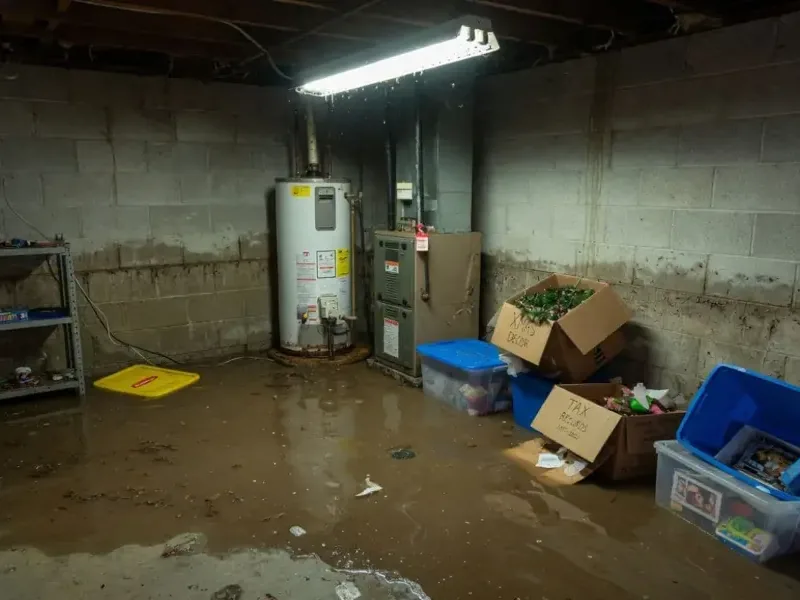
Tank and fitting water

Water Heater Leak Cleanup in Firestone, CO

A tank rupture, valve leak, or fitting failure can spread beneath flooring before the utility area looks severe. Restoration starts with safe isolation and a complete footprint check. Source repair and building restoration proceed on separate tracks.

(888) 532-8620Report the leaking tank
Utilities considered before access Appliance footprint tested Rooms below checked when relevant
Failed water heater beside a wet utility floor and extraction tools
Water Heater Leak Cleanup · Firestone, CO
SafetyControl water and utilities
FootprintInspect beneath the tank
SpreadTest walls and floor seams
RecoveryDry materials after repair
First steps

What to do right now about water heater leak cleanup

  1. 1

    Use safe controls only

    Avoid hot water and wet utility components, and operate only shutoffs or appliance controls that are known and safely accessible. The work path remains clear for the appropriate repair technician.

  2. 2

    Protect repair access

    Move dry nearby contents without crossing wet electrical areas, and leave space for tank or fitting service.

  3. 3

    Extract the footprint

    The crew removes open water and checks beneath the unit, floor seams, walls, thresholds, cabinets, and lower rooms.

  4. 4

    Dry retained layers

    Damaged barriers are addressed, then monitored equipment serves each retained material until its readings meet the selected goal.

How the work is done

What a proper water heater leak cleanup job takes in Firestone

Safe utility coordination

Water, heat, electricity or gas, appliance weight, and repair access are considered before extraction or movement around the tank. That check can reveal a concealed route beneath the appliance base.

Tank footprint inspection

The area beneath the appliance, pan, platform, connections, and nearby cabinet receives another check once service access exposes it.

Transition and lower room checks

Floor seams, thresholds, wall bases, penetrations, and the ceiling below reveal water that escaped the visible utility area.

Separate material monitoring

Concrete, flooring, wood, drywall, and framing receive individual readings from the wet baseline through the final dry condition.

Cost

What does water heater leak cleanup cost in Firestone, CO?

A quickly controlled leak on a durable hard floor is usually near the first range. Finished spaces, water beneath flooring, long duration, wall cavities, and downward travel raise the scope. Tank movement, utility protection, and contents access can also increase labor around the loss.

Hard floor only

$900 to $2,500
  • Accessible release near the tank
  • Focused extraction and edge tests
  • Limited durable material drying

Into finished space

$2,500 to $6,000
  • Flooring or wall finishes exposed
  • Transitions and lower areas inspected
  • Several materials monitored separately

Long running failure

$6,000 to $12,000
  • Extended hidden moisture around appliance
  • Wider access and finish decisions
  • Expanded equipment and documentation

What moves the number most:

  • The water category: clean, gray or black water
  • Square footage and how many levels got wet
  • Material class: carpet, drywall, hardwood or a concrete slab
  • How many hours passed before drying started

Ranges are typical, not a quote. The water damage cost calculator gives a closer range for your own rooms.

Response protocol

Water Heater Leak Cleanup, step by step

On every Firestone job, moisture gets mapped before any equipment goes down, and the equipment stays until the readings say dry.

1

Coordinate controls

The technician confirms source status, utility hazards, appliance service access, and safe locations for water removal tools. Control status remains visible in the room record.

2

Trace the footprint

Readings cover the tank base, platform, floor transitions, walls, cabinets, adjoining rooms, and any lower ceiling. New access beneath the tank receives direct readings.

3

Remove trapped water

Extraction and limited access address pockets beneath finishes while damaged materials are separated from stable retained construction. Each trapped layer has a specific removal decision.

4

Measure every material

Monitoring compares concrete, wood, drywall, framing, and flooring trends until the whole affected route reaches completion. Completion includes the repaired source footprint.

Water heater losses can be sudden or slow. A visible stream creates obvious urgency, while a fitting leak may soak a floor edge over time. In either case, the heavy appliance, hot water, electricity or gas, and surrounding finishes all affect safe access and restoration order.

Appliance service and water cleanup must coordinate

The relevant controls are handled before restoration tools crowd the utility area. The failed tank or connection is photographed, and access for the appropriate trade remains open. Extraction can begin around safe edges while the crew avoids moving a heavy unit across softened flooring.

  • Keep clear of hot water and wet utility components
  • Preserve a stable path for tank service
  • Document the source area before equipment moves

The former tank position deserves its own inspection

Water can collect beneath the base, platform, pan, or nearby cabinet where it is hidden until the appliance moves. The crew retests that footprint when access changes. Readings also follow perimeter trim, wall plates, seams, thresholds, and any ceiling below.

  • Check floor transitions beyond the utility room
  • Inspect wall materials on every wet edge
  • Measure lower ceilings when gravity supports that route

Drying begins with the exposed assembly

Swollen products, trapped floor layers, or wet insulation can prevent airflow. Limited removal reveals the retainable structure and creates evaporation surfaces. Concrete, wood, drywall, and framing are measured separately because they release moisture at different rates.

  • Remove only layers that cannot recover or block access
  • Place equipment without obstructing source repair
  • Verify the complete footprint before closing finishes

After appliance access improves, the former tank position and platform are inspected again for pooled water, softened products, or readings that extend beneath nearby finishes.
Service area

Water heater leak cleanup across Firestone and the towns nearby

Dispatch runs day and night, and the restoration team works every neighborhood listed on the service area page.

Firestone, CO

Water heater cleanup serves Booth Farms, Sagebrush, Neighbors Point, St. Vrain Ranch, Cordovan, Barefoot Lakes, and Mountain Shadows across ZIP area 80504 when water from a failed tank reaches finished building materials.

The same service nearby: water heater leak cleanup in Lafayette, Fort Lupton, Niwot.

Water damage restoration in Firestone · every town covered

Water still moving through a Firestone house? 24/7 dispatch: (888) 532-8620
FAQ

Water Heater Leak Cleanup questions, answered

What controls should be used during a tank leak?

Controls depend on the equipment and conditions. Avoid hot water and wet electrical components, and use only water or utility controls that are understood and safely accessible.

Can a water heater leak reach another level?

Yes. Water can travel through floor seams and penetrations into framing and a ceiling below. Building layout and direct readings determine whether that path occurred.

Who replaces or repairs the tank?

An appropriate plumbing or appliance trade handles the tank, valve, or fitting. Restoration addresses escaped water, damaged materials, cleaning, and structural drying.

Does tile keep the floor below dry?

Not necessarily. Grout, perimeter joints, penetrations, and transitions can admit water to lower layers. Direct measurements around those areas are needed.

Can flooring remain after the leak?

Construction, duration, swelling, adhesion, contamination, trapped water, and drying response control the decision. Some assemblies require access to the subfloor.

What if the leak was slow and hidden?

A small continuing release can alter cabinets, trim, walls, or floor products without a deep puddle. Condition and moisture spread become central to the scope.

When can the replacement tank be installed?

Tank work may proceed when safe access is available, but surrounding finish closure should wait until affected structural materials are measured dry.

Why is the tank footprint checked more than once?

The appliance can block readings and hide pooled water during the first inspection. Once safe service access changes its position, the exposed floor, platform, pan, wall, and connections provide better evidence for the restoration boundary.

Water still coming in?

The space beneath and around the tank can hold more water than the open floor shows.

(888) 532-8620Discuss the heater and affected finishes
24/7 emergency dispatch

Restore the entire appliance footprint

Safe coordination, extraction, transition checks, selective access, and material specific drying address the release from source to edge.

(888) 532-8620Call about tank water
Lafayette Water Damage Restoration Firestone, CO (888) 532-8620 Open 24 / 7 / 365
(888) 532-862024/7 dispatch