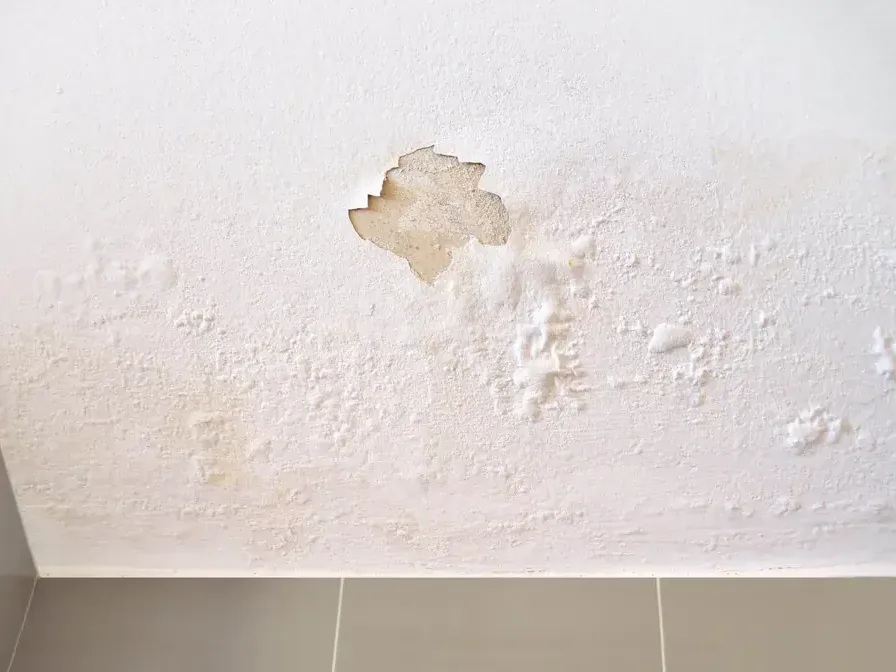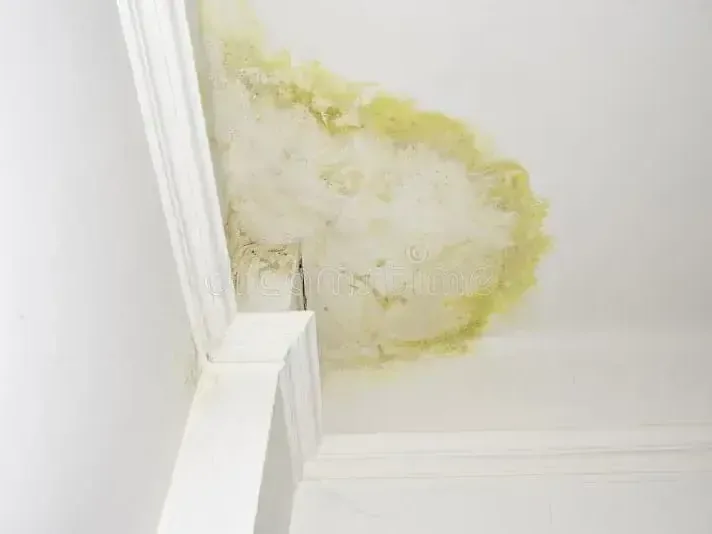
At the base of the Front Range, snow, hail and wind driven precipitation can expose a roof weakness. A local ceiling stain does not identify the exterior opening because water may follow decking, rafters or insulation before appearing indoors. The restoration scope begins after the roof is made temporarily weather resistant.
Inspection follows gravity and building layers
Technicians examine the visible stain, attic materials where safely accessible and connected wall or ceiling cavities. Moisture readings distinguish a surface mark from active saturation. Wet insulation may need removal to expose framing and allow airflow, while dry sections stay undisturbed. Photographs tie the interior route to the affected assemblies and preserve starting conditions.
- Confirm temporary weather protection
- Inspect accessible attic materials
- Map ceilings and adjoining walls
- Separate wet insulation from dry areas
A small roof opening can create a broad path
Water can move downslope beneath roof materials before dropping into the occupied space. Near Lookout Mountain, South Table Mountain and Clear Creek Canyon, technicians avoid assuming the stain sits directly below the entry. Meter patterns and observed wet insulation give a more reliable basis for selective openings and equipment placement.
- Trace movement beyond the first stain
- Open finishes only where justified
- Protect occupied rooms below attic work
Drying reaches framing before finishes return
After damaged materials leave, air movement and dehumidification target retained rafters, decking, ceiling framing and wall components. Readings are collected during visits and compared with dry references. Repair of the roof remains separate from restoration, and interior replacement should wait until the concealed structure has reached documented goals.