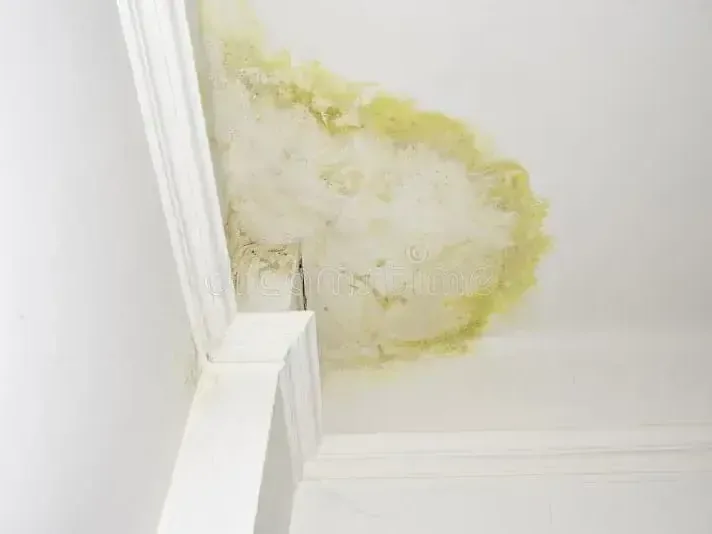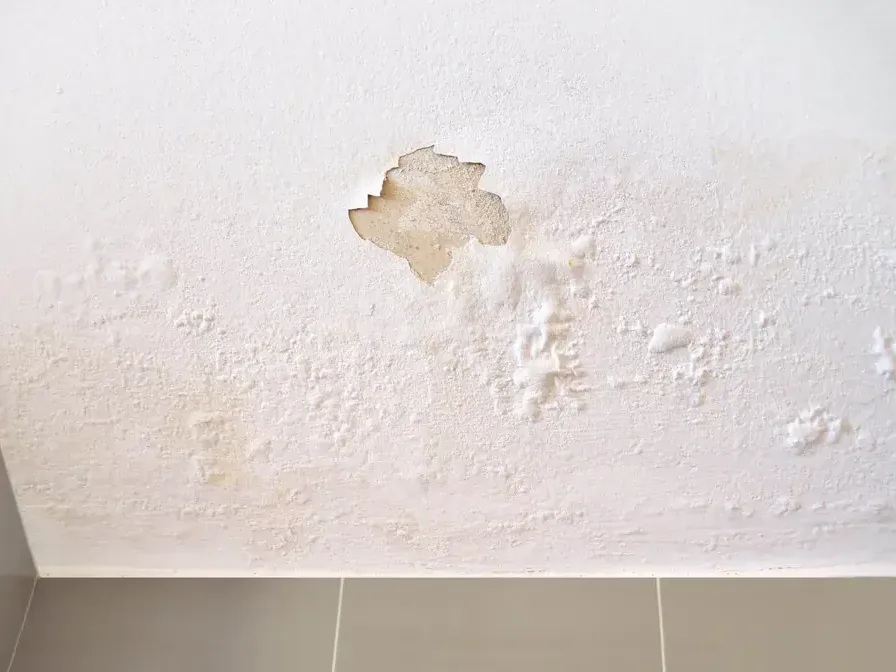
A ceiling leak here may follow wind driven precipitation from above or plumbing from an upper level. The stain alone cannot identify the origin. Water can move along framing before it appears, so technicians connect source investigation with readings across the ceiling, nearby walls and the room above where accessible. Photographs record the initial mark and nearby contents.
Safety controls come before opening the finish
Wet gypsum can soften and release without warning. People and belongings stay away from a sagging section, especially near electrical fixtures. Technicians assess the condition, protect the floor and make a controlled opening only when water release, damaged material removal or cavity access requires it. Random punctures are avoided, keeping debris contained and work access orderly.
- Restrict access below softened finish
- Note electrical fixtures near the stain
- Confirm the source is controlled
- Protect contents before cavity work
Source location shapes the inspection path
A roof route leads toward attic and exterior assemblies, while an upper fixture or pipe sends the inspection through floor framing and nearby walls. At Clear Creek, Lookout Mountain and the Colorado School of Mines area, building layouts differ, so technicians follow evidence instead of expecting the leak directly above the mark. The moisture pattern controls access.
- Check the room or assembly above
- Map beyond the stain boundary
- Evaluate wet insulation separately
Joist bays need access to drying air
Once the release has stopped, compromised finish and saturated insulation may be removed selectively. Air movement and dehumidification then address joists, subfloor and wall tops. Followup readings reveal whether the cavity is responding. Closing the ceiling waits until retained materials meet documented dry goals and repair can proceed without concealing moisture.