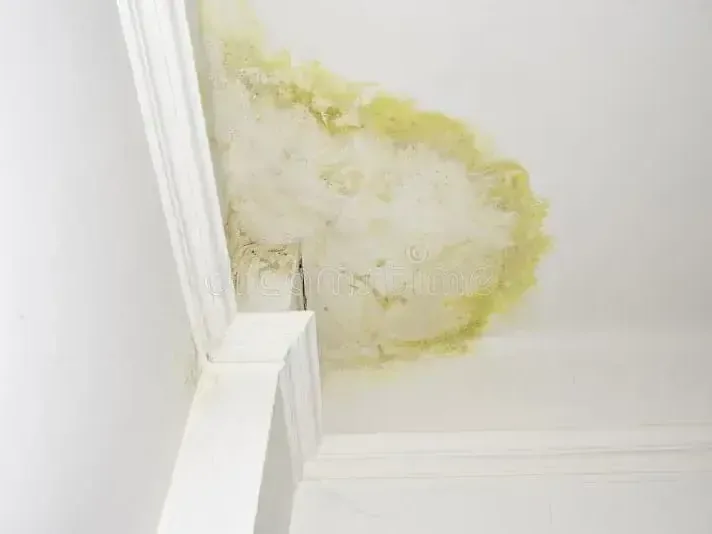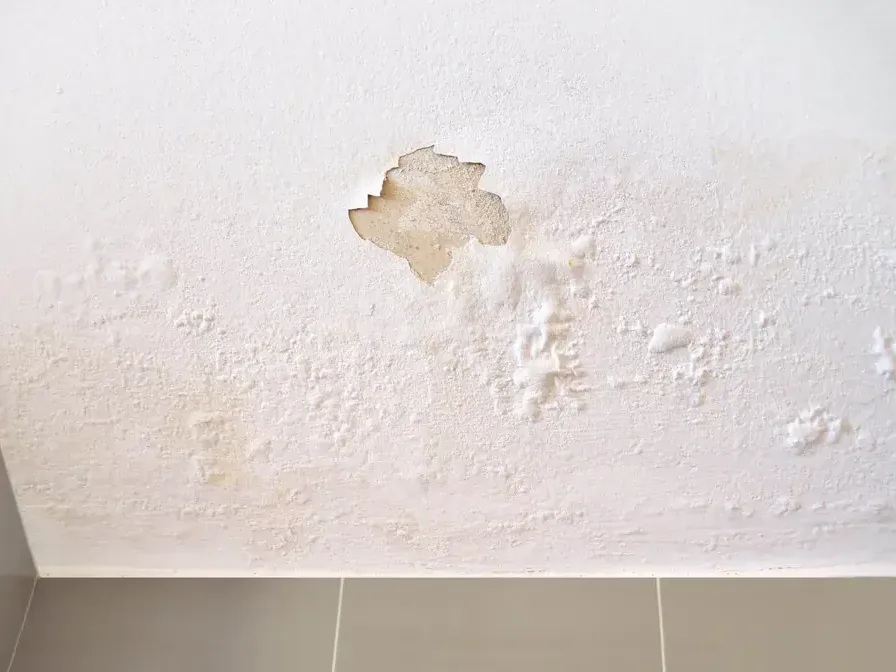
Ceiling water in Niwot can begin with plumbing above or precipitation entering the roof. Those causes require different source repairs, yet both can leave moisture inside insulation, framing and wall cavities. A crew starts by protecting the occupied room and reading the pattern instead of cutting around the first visible stain.
Make the room safe before opening the ceiling
Wet ceiling board can soften, bow and release debris. Furniture and occupants should remain outside the area beneath it, and water near lights or electrical systems requires safe power control. The source is shut off when accessible or assigned to the proper plumbing or roofing professional. Photographs record staining, movement and drip locations before material changes.
- Keep clear of sagging board
- Protect dry contents outside the fall zone
- Control active water at its source
- Document stains before opening material
Follow the path above and beside the mark
An upstairs drain can wet the joist bay and appear at a seam away from the fixture. Roof water may follow framing before dropping. Moisture readings are taken in the ceiling, adjoining walls and flooring below. In a property near Niwot Road or Johnson Farm, access depends on the actual assembly and room layout, not the neighborhood.
- Test both sides of the visible edge
- Inspect insulation when safely accessible
- Check floor materials beneath drips
Open only enough to dry the assembly
Loose board and saturated insulation are removed in controlled sections, exposing sound framing to air movement. Dehumidification manages moisture released into the room, while repeat measurements show whether the joist bay and nearby walls are improving. The opening stays available until verification. Roof leak service provides a focused path for precipitation related sources.