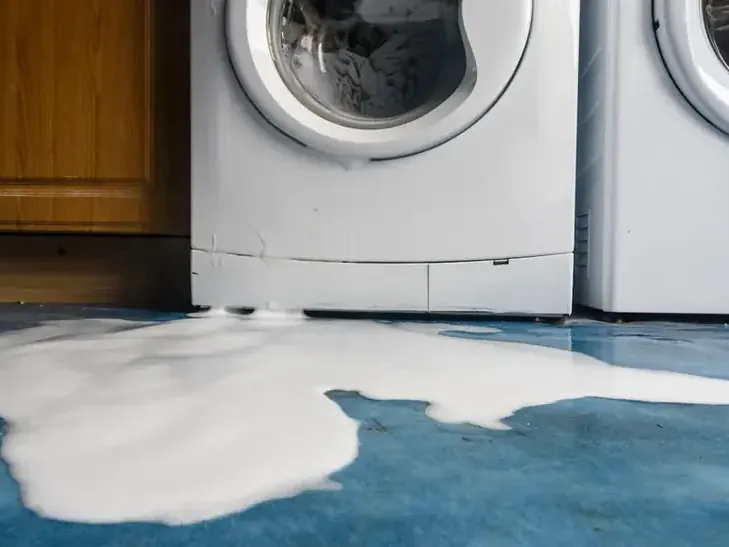
Appliance water often becomes visible after it has already crossed a concealed area. A dishwasher can wet the cabinet base, a washer can discharge behind the machine, and a refrigerator connection can release slowly beneath the floor edge. The inspection starts where access is safe and then maps outward.
Do not drag the appliance through the wet area
Large equipment can damage soft flooring, pull a connected hose, or expose wet electrical components if moved without preparation. The source is isolated, utility conditions are checked, and the route for appliance service is protected. Restoration access is coordinated with repair rather than forced.
- Use the correct appliance and water controls
- Keep cords and outlets away from standing water
- Photograph the connection area before movement
Cabinets and floor edges conceal moisture
Toe kicks, cabinet sides, wall plates, underlayment, and seams can hold water after the open floor is wiped. Direct readings across those materials define whether limited access will work. Rooms beside or below are checked when thresholds or penetrations give water a path.
- Inspect both sides of a shared wet wall
- Check under cabinet edges and floor transitions
- Measure ceilings below upper floor appliances
Slow leaks require a condition based scope
A small connection leak may persist long enough to swell wood products or weaken flooring adhesive. The crew distinguishes recent surface water from longer material change. Damaged layers are removed as needed, while stable retained areas receive dehumidification and targeted air until readings normalize.
- Look for swelling, staining, and loss of adhesion
- Separate appliance repair from restoration decisions
- Verify dry edges before cabinets or flooring are closed