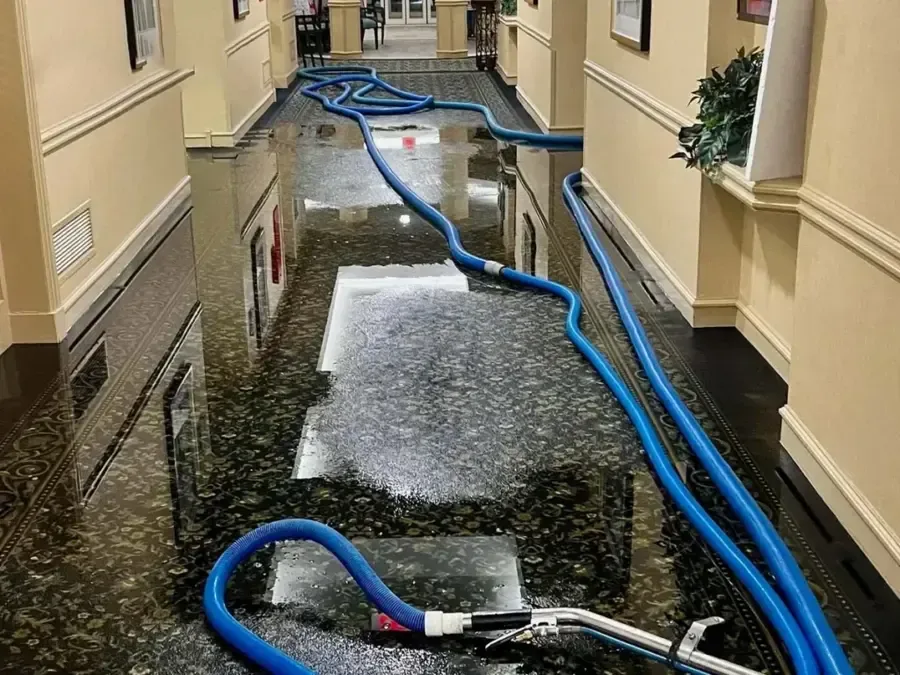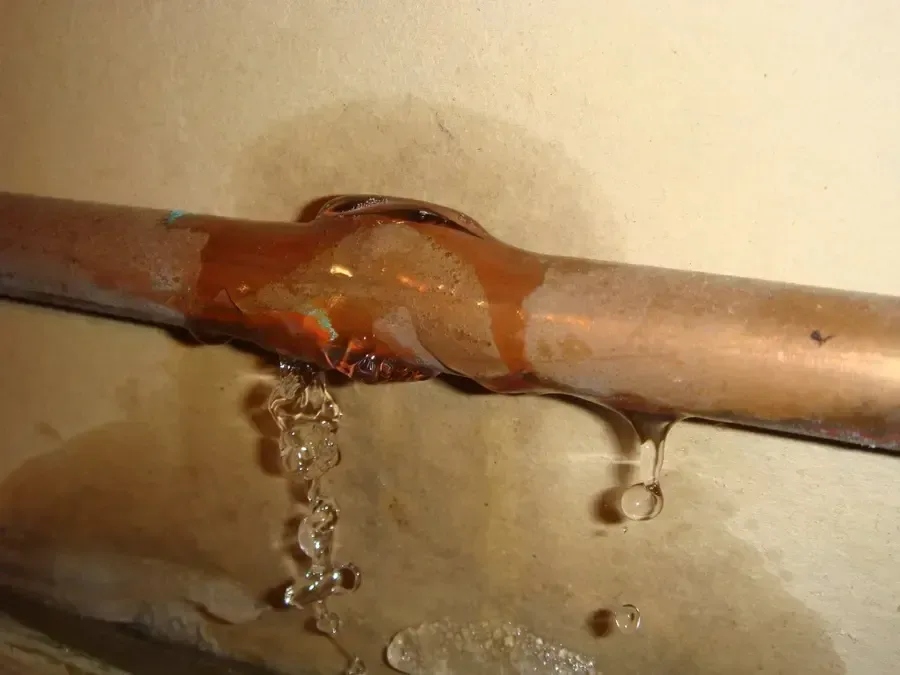
A documented 12-inch water main break affected local homes and businesses, while private main and lateral work can also disrupt service. An indoor pipe break is smaller in scale but follows the same essential order: stop the supply before trying to manage the water already inside the building. Early photographs preserve the starting condition.
The wet route matters as much as the break
Water leaving a pressurized pipe may cross framing bays, pass through a ceiling opening and collect beneath finished flooring. Technicians begin at the source, inspect rooms below or beside it and use moisture readings to define the actual boundary. Extraction clears accessible water while controlled openings give damp cavities a path to release moisture throughout the assembly.
- Verify the shutoff and repair status
- Inspect connected walls and ceilings
- Extract water from reachable surfaces
- Mark the measured moisture boundary
Selective access protects salvageable material
Not every stained surface needs broad demolition. Drywall may be opened where insulation is saturated or airflow cannot reach, while sound dry finishes remain in place. Near Clear Creek, Lookout Mountain and US 6, buildings can differ widely in layout and age, making direct readings more reliable than assumptions about construction. The measured boundary also protects unaffected rooms.
- Open cavities according to evidence
- Remove saturated insulation as needed
- Keep dry finishes outside the scope
Drying closes the cavity before repair
Once the plumber has addressed the pipe and extraction is complete, air movement and dehumidification target the remaining structural moisture. Technicians revisit the affected wall, ceiling or floor, compare material readings and adjust equipment placement. Final measurements document that the retained framing and subfloor are ready for the separate repair phase without concealed dampness.